
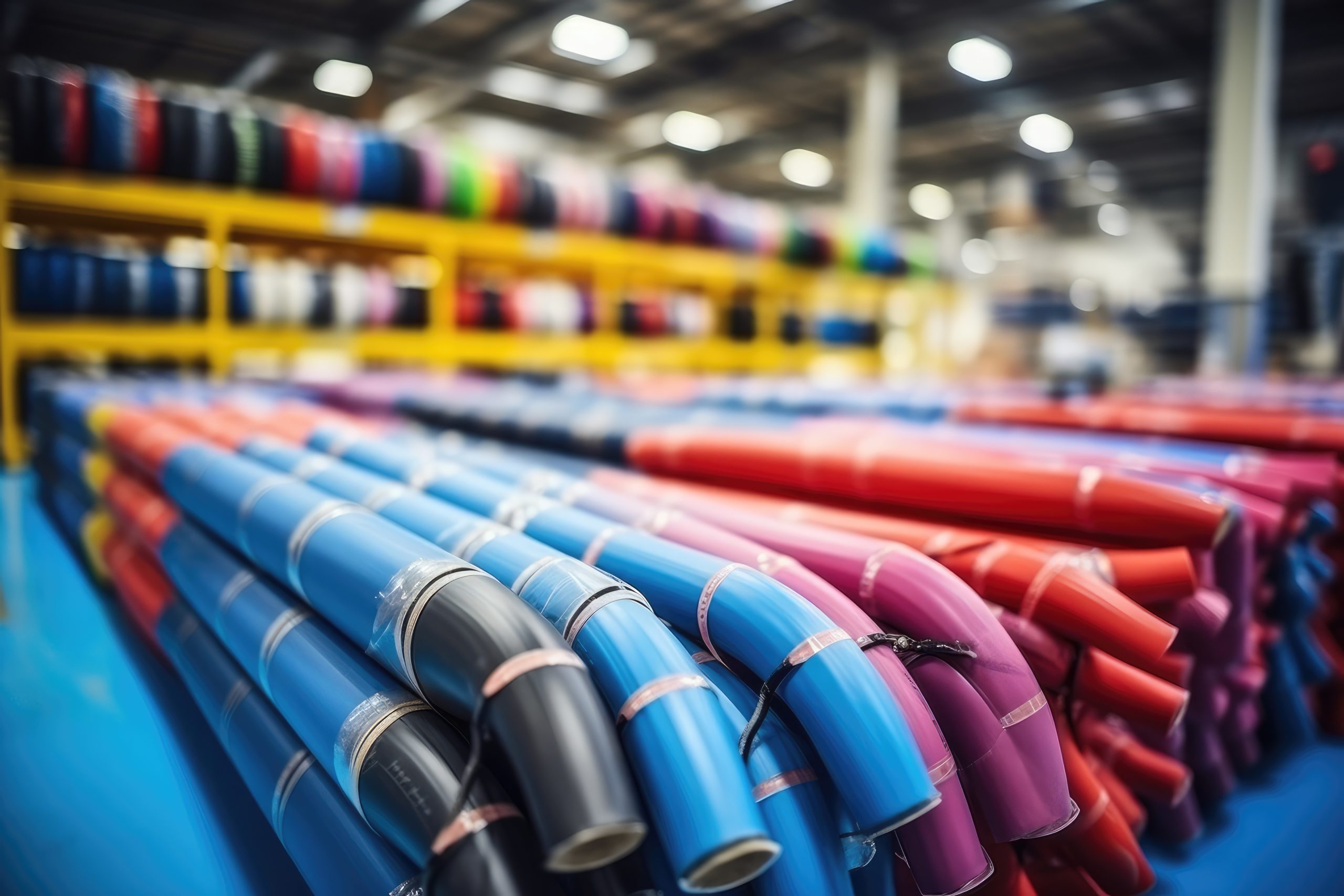
Thailand’s flexible pipe market is supported by continued investment in offshore gas production, industrial infrastructure, and energy transportation systems. Flexible pipes are useful in environments where operators require corrosion resistance, installation flexibility, and reliable performance under pressure. Natural gas consumption in Thailand averaged about 4,422 million cubic feet per day in 2025, with electricity generation accounting for 61% of total gas use. This dependence on gas, combined with offshore production in the Gulf of Thailand, creates a stable demand base for specialized piping systems.
Key Factors Driving Growth in Thailand’s Flexible Pipe Industry
Offshore Gas Production Supports Subsea Pipe Demand
Thailand’s offshore gas fields remain central to the country’s energy system. The G1/61 project, which includes the Erawan, Platong, Satun, and Funan fields, reached natural gas production of around 800 million cubic feet per day. Offshore production requires pipelines, risers, flowlines, and other subsea connections capable of operating in demanding marine environments. Flexible pipe systems can offer advantages where movement, seabed conditions, and installation complexity make conventional rigid piping less practical. Continued efforts to maintain production from mature fields should also create demand for replacement systems, brownfield upgrades, maintenance, and life-extension projects.
Thailand’s Heavy Reliance on Natural Gas Sustains Infrastructure Needs
Natural gas continues to play a major role in Thailand’s energy system. In 2025, electricity generation represented 61% of total natural gas consumption, while industry accounted for another 17%. This broad usage base supports continued investment in gas gathering, processing, transmission, industrial connections, and power-generation infrastructure. Flexible piping suppliers can benefit from specialized applications requiring compact routing, vibration resistance, chemical compatibility, or easier installation.
Mature Offshore Fields Encourage Upgrades and Maintenance
Thailand’s major offshore fields have been producing for decades, which increases the importance of maintaining existing infrastructure. Erawan and Bongkot together have historically accounted for about 60% of Thailand’s domestic natural gas production. As these assets age, operators may require additional inspection, replacement, and upgrading of piping systems. This creates opportunities for suppliers offering durable flexible pipes, corrosion-resistant materials, and lifecycle support services.
Government Initiatives Supporting Thailand’s Flexible Pipe Market
Thailand continues to prioritize domestic gas production as part of its energy-security strategy. Government-supported production-sharing arrangements for major Gulf of Thailand fields are designed to maintain supply continuity and reduce dependence on imported fuels. PTTEP’s production ramp-up at G1/61 to 800 million cubic feet per day reflects this focus. Energy planning also emphasizes balancing gas use with renewables while maintaining sufficient infrastructure for power generation and industrial demand.
Competitive Landscape of Thailand’s Flexible Pipe Industry
Thailand’s flexible pipe industry includes offshore energy operators, international subsea technology providers, EPC contractors, industrial pipe suppliers, and local engineering firms. Competition centers on corrosion resistance, pressure capability, fatigue life, installation efficiency, and technical support. Companies that can combine flexible pipe products with inspection, maintenance, engineering, and offshore installation services are likely to be better positioned, particularly as Thailand’s mature gas assets require more frequent upgrades and lifecycle management.
Challenges Affecting Thailand’s Flexible Pipe Market
Mature Fields Can Limit New Project Volumes
Thailand’s offshore sector includes several mature producing fields. While this supports replacement demand, declining reservoir productivity can reduce the scale of new greenfield developments and create uneven project pipelines.
Advanced Flexible Pipes Carry Higher Costs
Specialized offshore flexible pipes require multilayer materials, strict testing, and extensive qualification. These requirements can raise procurement costs compared with conventional pipe systems and may slow adoption in price-sensitive projects.
Future Outlook
In the upcoming years, Thailand’s flexible pipe market is likely to be shaped more by maintaining and upgrading existing energy infrastructure than by rapid expansion alone. Offshore gas will remain important as the country balances energy security with a gradual transition toward cleaner power sources. With natural gas consumption still above 4.4 billion cubic feet per day and major fields such as Erawan producing at substantial levels, demand should continue for subsea connections, replacement pipelines, and specialized industrial piping. Suppliers offering reliable products, corrosion-resistant technologies, and strong local service capabilities should remain well positioned.
Consultants at Nexdigm, in their latest publication “Thailand Flexible Pipe Market Outlook to 2035,” analyze the sector By Product Type (Bounded, Unbounded Flexible Pipes, Flexible Jumpers, Risers and Flowlines), By Application (Offshore Oil and Gas Production, Shale Oil and Gas Production, Mining Slurry Transportation and Chemical Transfer Systems).
Nexdigm suggests that businesses in Thailand’s Flexible Pipe Industry must prioritize offshore-ready and corrosion-resistant solutions, expand local capabilities, invest in advanced materials, and build lifecycle service offerings to capture upcoming energy infrastructure opportunities.
To take the next step, simply visit our Request a Consultation page and share your requirements with us.
Harsh Mittal
+91-8422857704