
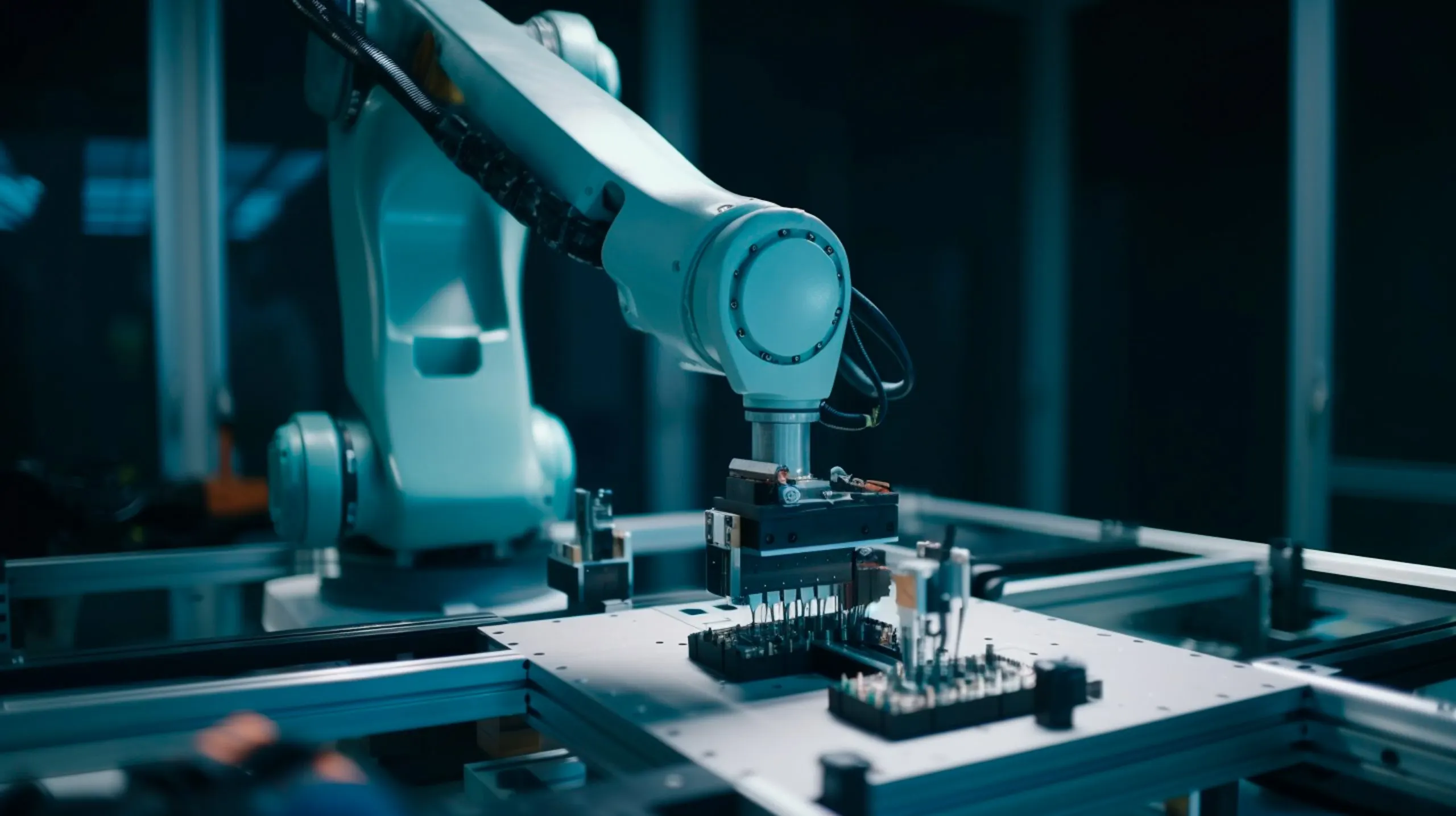
The Turkey industrial automation market is rapidly evolving, driven by the increasing demand for smarter, more efficient manufacturing solutions. With a market value of around USD 4.2 billion earlier, the industry is expected to experience robust growth over the next decade. As industries such as automotive, food processing, and textiles embrace automation, the country is stepping into the digital age. Automation solutions help manufacturers cut costs, improve product quality, and increase productivity. This shift to smarter, connected systems positions Turkey’s industrial sector to compete on the global stage, enabling businesses to innovate and thrive.
Key Drivers Behind the Growth of Industrial Automation in Turkey
The Push for Industry 4.0 and Digital Integration
One of the driving forces behind Turkey’s industrial automation boom is the country’s growing adoption of Industry 4.0 technologies. These technologies, including the Industrial Internet of Things (IIoT), robotics, and advanced data analytics, are reshaping traditional manufacturing. With real-time data and intelligent systems, manufacturers are optimizing production lines, reducing downtime, and improving decision-making processes. Factories are becoming more flexible, efficient, and responsive to changing market demands. This digital shift not only enhances efficiency but also opens up new avenues for innovation, helping Turkish manufacturers stay competitive in the global marketplace.
Sector-Specific Demand for Automation Solutions
In Turkey, specific sectors like automotive, textiles, and food & beverage are increasingly turning to automation to meet global production standards. The Turkish automotive industry, one of the largest in Europe, is adopting robotic arms, automated assembly lines, and quality control systems to ensure faster production with greater precision. Similarly, food manufacturers are investing in automated packaging and process control systems to maintain product quality and ensure food safety standards. As more industries realize the potential of automation, smaller companies are also jumping on board, looking to boost productivity and compete more effectively. This sector-specific demand is expanding the overall automation landscape across the country.
Government Initiatives Fueling Growth in Turkey’s Automation Industry
The Turkish government plays a critical role in accelerating industrial automation adoption by offering various incentives, funding opportunities, and support for R&D. Programs under agencies such as TÜBİTAK (Scientific and Technological Research Council of Turkey) provide grants for the development of automation technologies and smart manufacturing solutions. In addition, the government is investing in workforce training programs to ensure that the workforce has the necessary skills to operate and maintain automated systems. These initiatives create an environment conducive to innovation, helping small and medium-sized enterprises (SMEs) implement automation technologies. With continued government backing, automation will only become more accessible across Turkey’s industrial sectors.
Competitive Landscape and Innovation Leaders in Turkey’s Automation Industry
The Turkey industrial automation market features a blend of established global players and innovative local companies. Multinational giants like Siemens, ABB, and Schneider Electric dominate the landscape, offering a wide range of automation solutions that span various industries. However, local companies are also making their mark, offering specialized solutions tailored to Turkey’s specific needs. Regional system integrators and technology providers are developing cost-effective automation solutions for small and medium-sized manufacturers, enhancing the competitiveness of local businesses. As competition intensifies, companies are focusing on differentiation through customer service, advanced software solutions, and customization, driving innovation across the market.
Challenges Facing the Turkey Industrial Automation Market
Cost of Implementation and Integration Complexity
Despite the growth potential, one of the biggest hurdles for the industrial automation market in Turkey is the high upfront cost and complexity of implementation. The initial investment in automation technologies, including hardware, software, and workforce training, can be significant, making it difficult for smaller businesses to justify these expenses. Additionally, integrating new automation systems with existing legacy equipment can be a complex and time-consuming process, further driving costs. As companies strive for cost-effective solutions, the challenge remains to make automation accessible and economically viable for a broader range of manufacturers.
Workforce Skills Gap and Training Needs
Another challenge Turkey faces is the shortage of skilled workers to operate and maintain advanced automation systems. While Turkey’s manufacturing sector is expanding, there is a gap in the availability of qualified professionals with expertise in robotics, control systems, and digital manufacturing. This skills gap could hinder the widespread adoption of industrial automation if not addressed through targeted workforce development and training programs. The Turkish government and private companies are investing in education and upskilling initiatives, but the pace must increase to meet the growing demand for skilled labor in the automation sector.
Future Outlook
Turkey’s industrial automation market is set to grow substantially as digital technologies continue to transform manufacturing processes across the country. With a projected market value growing rapidly, industrial automation will become an integral part of Turkey’s industrial infrastructure. New advancements in robotics, artificial intelligence, and machine learning will drive the development of smarter, more adaptable factories. As more Turkish manufacturers adopt these technologies, the country will further solidify its position as a global manufacturing hub. The future of automation in Turkey is bright, with continuous innovation and government support ensuring that industries can keep up with evolving global demands, boosting productivity and sustainability along the way.
Consultants at Nexdigm, in their latest publication Turkey Industrial Automation Market Outlook to 2035, analyze the sector by System Type (PLC Type, SCADA System, DCS System, Industrial Robots, Safety Instrumented Systems), by End User segment (Automotive Industry, Electronics and Semi-Conductors, Oil and Gas, Food and Beverage, Pharmaceuticals).
Nexdigm suggests that businesses in Turkey should focus on leveraging digital transformation to enhance operational efficiency and stay competitive in an increasingly globalized market. This includes adopting emerging technologies such as automation, artificial intelligence, and the Industrial Internet of Things (IIoT). By investing in these technologies, companies can streamline their processes, improve data-driven decision-making, and enhance productivity.
To take the next step, simply visit our Request a Consultation page and share your requirements with us.
Harsh Mittal
+91-8422857704