
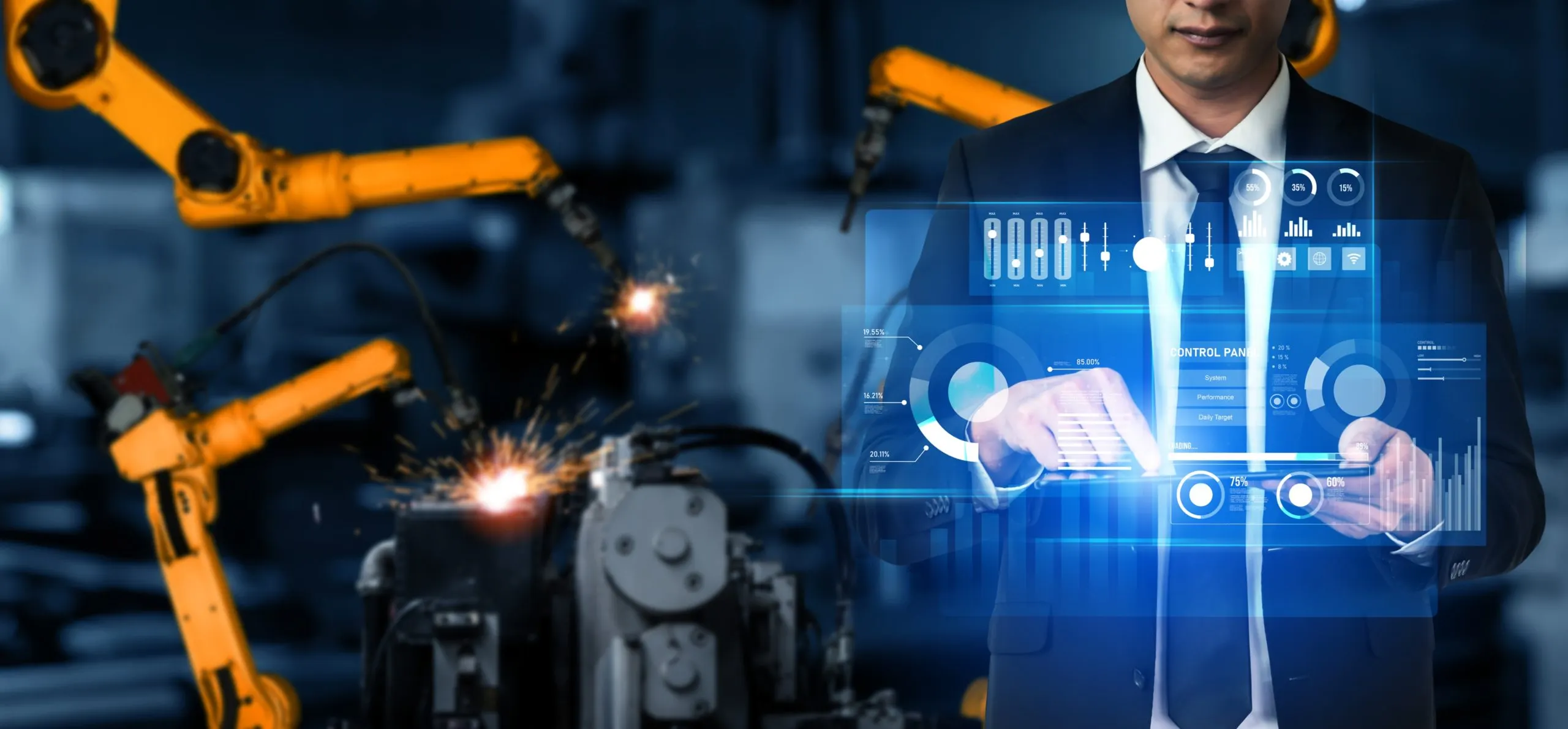
The UAE industrial automation market is set for robust expansion in the upcoming years, propelled by rapid industrialization and digital transformation across key sectors. Automation technologies such as robotics, AI‑driven control systems, and IoT‑enabled machinery are increasingly adopted to enhance productivity, reduce operational costs, and improve quality in manufacturing, oil & gas, logistics, and utilities. With global industrial automation revenues expected to rise significantly by the next decade and the UAE actively embracing smart manufacturing initiatives, the region represents an important growth arena. Strong policy support and rising investment are also strengthening the automation ecosystem, positioning the UAE as a regional hub for advanced industrial technologies.
Key Growth Drivers of UAE Industrial Automation Market
Manufacturing and Oil & Gas Digitalization
The push toward Industry 4.0 is a leading driver behind the UAE’s automation adoption. Manufacturers are implementing robotics and machine‑vision systems to improve output, precision, and safety. In sectors like automotive components, food & beverage, and electronics, automation reduces cycle times and minimizes defects, enabling higher throughput. The oil & gas sector, a major contributor to UAE GDP, is also applying digital control systems, predictive maintenance, and automated drilling platforms to cut downtime and operational risks.
Smart Logistics and Infrastructure Investment
Another critical driver is investment in smart ports, warehousing, and logistics automation. Facilities such as autonomous guided vehicles (AGVs), automated storage and retrieval systems (AS/RS), and real‑time tracking platforms are increasingly deployed to handle rising trade volumes. Government‑backed logistics hubs are integrating automation to maintain competitive advantage in global supply chains. As e‑commerce and regional trade expand, automated systems are helping enterprises address labor shortages and accelerate material handling, contributing to an estimated double‑digit CAGR for the overall automation market in the UAE in the coming years.
UAE Government Strategy and Programs to grow Industrial Automation Market
The UAE government’s proactive support is facilitating industrial automation growth through initiatives such as the National Innovation Strategy. Policies encourage the adoption of advanced robotics, digital twins, AI, and machine learning across industrial sectors. Special economic zones and technology parks provide regulatory incentives and capital support for automation investments. These measures are designed to improve productivity, enhance competitiveness, and integrate the UAE into global smart manufacturing networks.
UAE’s Competitive Landscape in Automation Technologies
The UAE industrial automation landscape features a mix of global technology providers, system integrators, and local engineering firms. International companies are partnering with UAE businesses to deliver turnkey automation solutions tailored to specific industry needs. Regional system integrators are increasingly competitive, bringing specialized expertise in robotics deployment, PLC/SCADA systems, and industrial IT infrastructure. This competitive mix drives innovation and accelerates market adoption across multiple sectors.
Market Challenges observed within UAE Automation Industry
Talent and Skills Shortage
A key challenge for the UAE automation market is the shortage of skilled professionals capable of designing, implementing, and maintaining advanced automation systems. While demand for automation engineers, data scientists, and robotics technicians is rising, the local talent pool remains limited, prompting reliance on expatriates and raising labor costs.
High Implementation Costs and Integration Hurdles
Industrial automation requires substantial upfront investment in hardware, software, and training. Small and medium enterprises (SMEs) often find cost barriers significant, leading to slower adoption rates. Integrating new automated systems with legacy equipment can also be complex, requiring tailored solutions and specialized support, which adds to implementation time and expenses.
Future Outlook
The UAE industrial automation market is expected to continue its upward trajectory, driven by sustained demand for digital transformation and operational efficiency. Automation solutions are likely to become more accessible to SMEs as costs decline and modular platforms emerge. Increased deployment of AI‑enabled predictive maintenance, autonomous robotics, and digital twin technologies will enhance asset performance across industries. Government investment in workforce development and smart infrastructure will further support adoption. As global supply chains evolve and competition intensifies, automation will be critical to maintaining the UAE’s industrial competitiveness and economic diversification goals, making it a central component of the nation’s technological advancement strategy.
Consultants at Nexdigm, in their latest publication UAE Industrial Automation Market Outlook to 2035, analyze the sector by System Type (PLC Type, SCADA System, DCS System, Industrial Robots, Safety Instrumented Systems), by End User segment (Automotive Industry, Electronics and Semi-Conductors, Oil and Gas, Food and Beverage, Pharmaceuticals).
Nexdigm suggests that businesses should invest in talent development to equip their workforce with the skills necessary to navigate technological advancements. In addition, forming strategic partnerships and fostering innovation are essential to driving growth and sustainability in the long term. By taking these steps, companies can adapt to market changes, reduce costs, and maintain a competitive edge in their industries.
To take the next step, simply visit our Request a Consultation page and share your requirements with us.
Harsh Mittal
+91-8422857704