
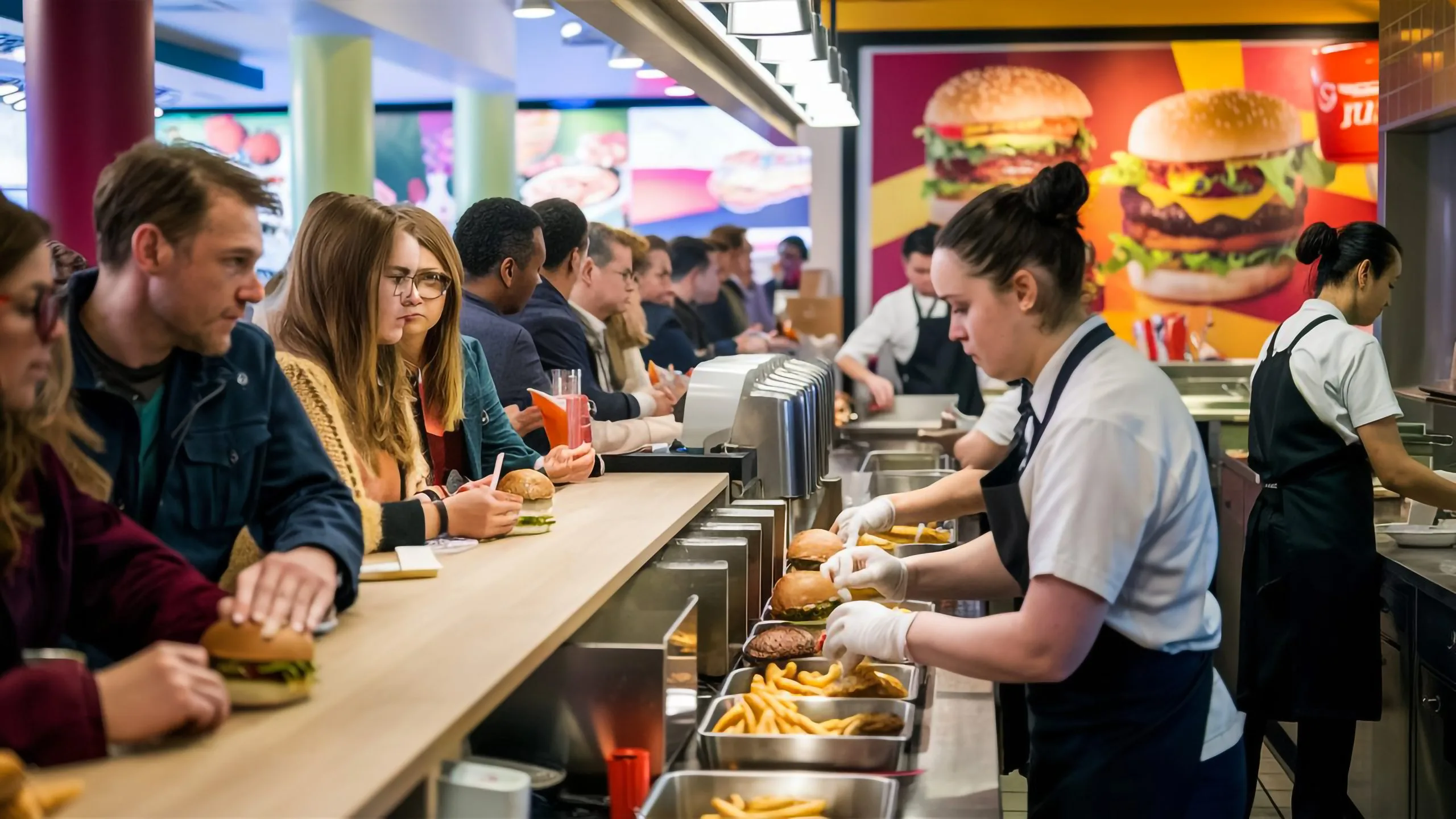
The UAE quick service restaurant market is expanding rapidly as consumers look for fast, convenient, and affordable dining options across busy urban lifestyles. The market is estimated at around USD 6.69 billion in 2025 and is projected to reach USD 19.28 billion by 2031, growing at a 19.66% CAGR. Strong demand from expatriates, tourists, young professionals, families, and digitally active consumers is reshaping QSR formats. Delivery platforms, cloud kitchens, mall-based outlets, drive-thru restaurants, and mobile ordering are making quick service dining more accessible across Dubai, Abu Dhabi, Sharjah, and other emirates.
Key market drivers are strengthening UAE quick service restaurant growth
Delivery platforms and cloud kitchens are reshaping access
Food delivery has become one of the strongest drivers of the UAE QSR market. Consumers increasingly use mobile apps to order meals at home, offices, hotels, and shared accommodation spaces. Delivery platforms help QSR brands reach customers beyond physical outlets, while cloud kitchens allow operators to serve high-demand locations with lower front-end infrastructure costs. These formats are particularly relevant in dense urban areas where speed, convenience, and menu variety matter. For restaurant operators, delivery data also helps improve menu planning, pricing, promotional offers, and customer retention strategies.
Tourism and expatriate demand are supporting diverse QSR formats
The UAE’s large expatriate population and strong tourism sector create demand for a wide range of quick service cuisines. Consumers look for burgers, fried chicken, pizza, shawarma, sandwiches, biryani bowls, Asian fast food, healthy bowls, desserts, and beverages across different price points. Tourists and residents often prefer recognizable brands, quick meals, and accessible locations in malls, airports, business districts, hotels, and leisure destinations. This diversity gives both global chains and local QSR brands room to expand with localized menus and international formats.
Digital payments and loyalty programs are improving customer engagement
Digital payments, app-based ordering, reward programs, and personalized offers are becoming central to QSR growth in the UAE. Consumers expect quick checkout, real-time order tracking, and consistent service across dine-in, pickup, and delivery channels. Brands that use customer data effectively can improve repeat orders, strengthen loyalty, and tailor promotions to different consumer segments.
Government support and initiatives are improving foodservice growth conditions
Government initiatives supporting tourism, foreign investment, digital transformation, food safety, and small business growth are helping strengthen the UAE foodservice ecosystem. The country’s focus on becoming a global tourism and business hub supports restaurant expansion across hotels, malls, airports, and entertainment districts. Food safety regulations, licensing frameworks, and digital payment infrastructure also support organized QSR growth. In addition, initiatives encouraging entrepreneurship and cloud kitchen development are creating new opportunities for local and international foodservice operators.
Competitive landscape is becoming more delivery and brand experience focused
The UAE QSR market includes global fast-food chains, regional brands, local operators, cloud kitchen concepts, delivery-first restaurants, mall-based outlets, café formats, and franchise groups. Competition is shaped by cuisine variety, price, speed, delivery ratings, brand trust, location, digital visibility, and customer experience. International brands benefit from recognition and standardized operations, while local players compete through regional flavors, affordability, and flexible delivery-led formats. Operators that combine convenience, quality, and strong digital engagement are likely to gain stronger market traction.
Market challenges continue to affect profitability and operational efficiency
Rising costs are putting pressure on margins
QSR operators in the UAE face cost pressures from rent, wages, imported ingredients, utilities, packaging, delivery commissions, and marketing expenses. These costs can affect margins, especially for brands competing on value meals and frequent promotions.
High competition makes customer retention more difficult
The UAE’s dense restaurant market gives consumers many options across price points and cuisines. This makes repeat business harder to secure. Brands need consistent quality, fast service, strong delivery performance, and meaningful loyalty programs to retain customers.
Future outlook
The future outlook for the UAE quick service restaurant market remains strong, supported by tourism growth, expatriate demand, urban lifestyles, delivery adoption, and continued investment in foodservice formats. The market is projected to reach USD 19.28 billion by 2031, reflecting significant long-term opportunity. Growth is expected across cloud kitchens, delivery-first brands, drive-thru formats, healthier QSR options, value menus, and app-based loyalty programs. Businesses that invest in digital ordering, operational efficiency, localized menus, and customer experience will be better positioned to capture future market growth.
Consultants at Nexdigm, in their latest publication “UAE quick service restaurant market outlook to 2035,” analyze the sector By Product Type (Burgers and Sandwiches, Pizza and Pasta, Chicken-based QSR, Mexican and Tex-Mex), By Service Model (Dine-in, Takeaway, Drive-thru)
Nexdigm suggests that businesses in the UAE quick service restaurant market should focus on delivery efficiency, cloud kitchen models, and digital ordering to meet convenience-driven consumer demand.
To take the next step, simply visit our Request a Consultation page and share your requirements with us.
Harsh Mittal
+91-8422857704