
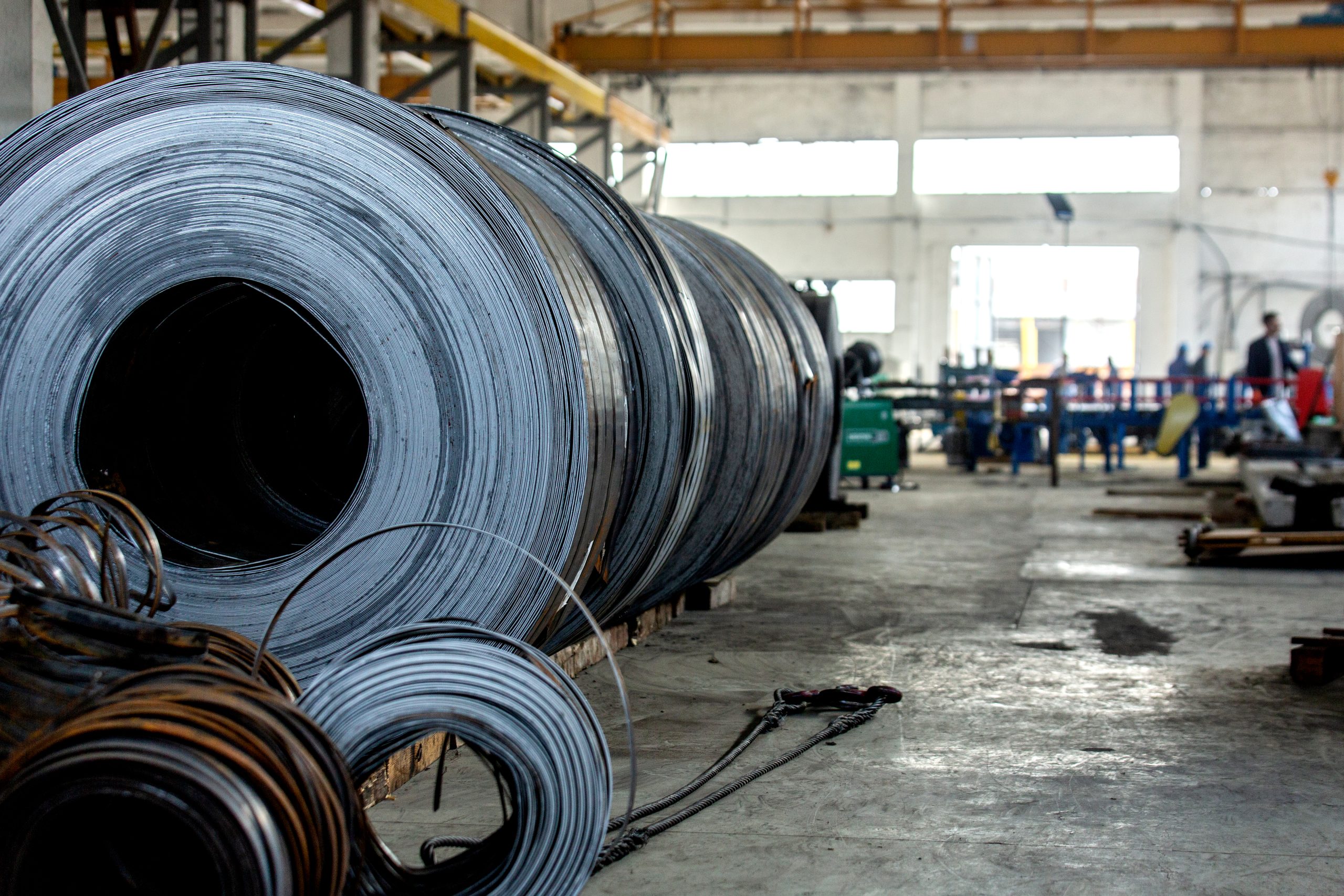
The UAE sintered steel market is supported by expanding demand for precision-engineered, material-efficient, and high-performance metal components across industrial machinery, automotive systems, electrical equipment, construction machinery, energy infrastructure, and advanced manufacturing applications. Sintered steel enables manufacturers to produce complex components with limited machining and reduced material waste. The UAE industrial sector contributes approximately AED 205 billion to national GDP, while Operation 300bn aims to raise this contribution to AED 300 billion. Expanding localization, automation, and downstream metal processing are creating opportunities for advanced powder-metallurgy products.
Key Market Drivers of UAE Sintered Steel Market
Expanding Domestic Industrial Manufacturing
The UAE is strengthening its industrial base across heavy manufacturing, machinery, electrical equipment, transportation systems, renewable energy, and advanced technologies. The industrial sector’s contribution to GDP has increased to approximately AED 205 billion from AED 133 billion when Operation 300bn was launched. Sintered steel components are used in gears, bearings, bushings, sprockets, pumps, motors, structural assemblies, and other precision applications where high-volume production and dimensional consistency are important. Continued industrial localization and factory modernization are therefore strengthening the potential demand base for powder-metallurgy components.
Strong Steel and Metal Processing Ecosystem
The UAE maintains substantial domestic steelmaking and downstream metal-processing capabilities. Domestic steel producers manufactured approximately 3.25 million tonnes of crude steel and 2.84 million tonnes of finished steel products during 2024. The sector also operates significant steelmaking and direct-reduction capacity. This established metal ecosystem supports access to metallurgy expertise, fabrication, heat treatment, machining, engineering services, and industrial infrastructure that can facilitate the development of higher-value sintered and precision-engineered components.
Demand for Precision and Material-Efficient Components
Manufacturers are increasingly seeking components that offer dimensional accuracy, repeatability, controlled density, and lower material waste. Sintered steel is well suited to high-volume production of complex parts because powder metallurgy can reduce secondary machining and improve material utilization. Expanding demand from industrial machinery, electrical systems, pumps, motors, automotive applications, and equipment manufacturing creates opportunities for higher-density sintered components and customized alloy formulations.
Government Support towards UAE Sintered Steel Market
Government programs supporting industrial localization, advanced manufacturing, and technology adoption create a favorable environment for sintered-steel development. Operation 300bn aims to increase the industrial sector’s GDP contribution to AED 300 billion while strengthening local production and supply chains. Government-backed financing initiatives support priority sectors, including heavy industries, machinery, electrical equipment, and transportation infrastructure, supporting capacity expansion and advanced manufacturing investments.
Competitive Landscape of UAE Sintered Steel Market
The UAE sintered steel market includes international powder-metallurgy suppliers, steel producers, precision-engineering companies, industrial manufacturers, automotive component distributors, and specialized metal-processing businesses. Competition is based on material quality, density, dimensional precision, tooling capability, production consistency, heat-treatment expertise, engineering support, and delivery reliability. Domestic steel and engineering companies strengthen the broader manufacturing ecosystem, while specialized sintered components continue to be supported by international suppliers and regional distribution networks.
Market Challenges of UAE Sintered Steel Market
Dependence on Imported Powder Metallurgy Inputs
The UAE has strong conventional steelmaking and fabrication capabilities, but specialized powder-metallurgy manufacturing remains comparatively limited. Producers may depend on imported iron powders, alloying materials, compacting equipment, precision tooling, specialized furnaces, and technical know-how. This dependence can increase exposure to international shipping costs, procurement delays, and changes in input availability.
Competition from Conventional Manufacturing Technologies
Sintered steel competes with forged, cast, machined, and fabricated components across many industrial applications. For low-volume production, very large parts, or applications requiring extremely high structural strength, conventional manufacturing technologies may remain more economical. Sintered steel suppliers must therefore demonstrate advantages in material utilization, repeatability, dimensional accuracy, production speed, and component design flexibility.
Future Outlook
The UAE sintered steel market is expected to benefit from manufacturing localization, industrial automation, machinery production, transportation investment, and the expansion of advanced metal-processing capabilities. Future opportunities should increasingly emerge from high-density gears, bearings, motor components, pumps, electrical systems, industrial machinery, and precision-engineered products. Manufacturers combining advanced powder formulations, automated production, technical expertise, local engineering support, and application-specific development should be better positioned to capture emerging demand.
Consultants at Nexdigm, in their latest publication “UAE Sintered Steel Market Outlook to 2035,” analyze the sector By Application (Engine Components, Transmission and Gear Components, Motor and Pump Components, Bearing and Brushing Components), By Product Type (Structural Sintered Steel Components, Sintered Gears and Sprockets, Sintered Bushings and Bearings, Sintered Engine Components, Sintered Compressor Components
Nexdigm suggests that businesses in the UAE sintered steel market should invest in advanced powder metallurgy, strengthen local manufacturing capabilities, diversify toward industrial machinery and transportation applications, improve production efficiency, and develop high-performance components to capitalize on expanding industrial localization and precision-engineering demand.
To take the next step, simply visit our Request a Consultation page and share your requirements with us.
Harsh Mittal
+91-8422857704