
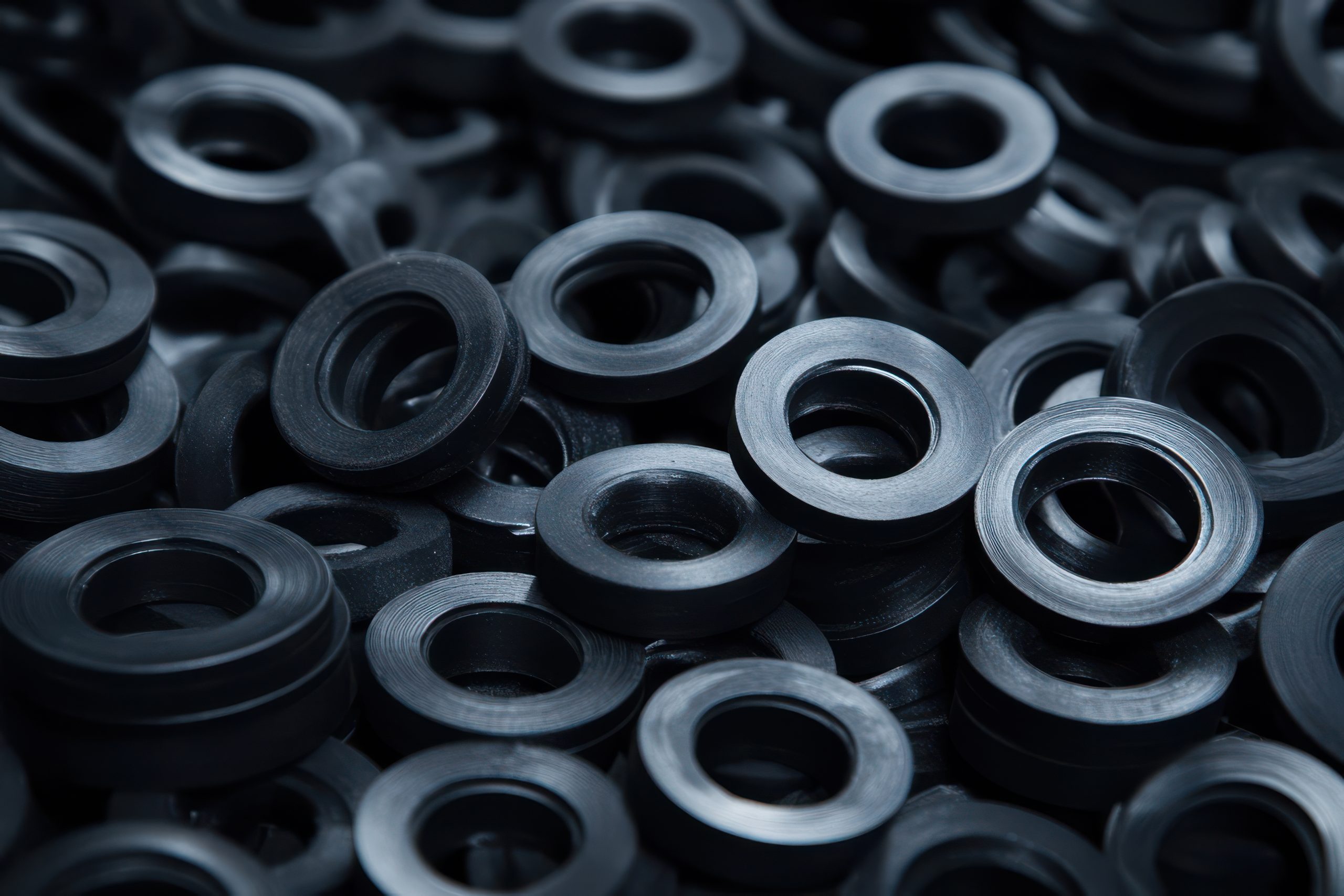
Gaskets and seals are essential components behind the reliable operation of many US industries, even though they rarely receive attention outside the equipment they protect. They help prevent fluid and gas leakage, maintain pressure, reduce vibration, and protect machinery in automotive, aerospace, manufacturing, energy, chemical, marine, and electronics applications. The US gasket and seal materials market generated approximately USD 9.34 billion in 2024 and is projected to reach USD 12.88 billion by 2030, representing a 5.5% CAGR. Rubber accounted for 41.78% of revenue in 2024, while PTFE is expected to register the fastest growth.
Market Drivers for the US Gaskets and Seals Industry
Industrial Activity Supports the US Gaskets and Seals Market
The US has a large and diverse industrial base, creating demand for sealing components across machinery, production equipment, pumps, compressors, valves, hydraulic systems, and processing facilities. As manufacturers maintain, replace, and modernize equipment, gaskets and seals are required both in original equipment and maintenance applications. Recent industrial data point to continued manufacturing activity. In July 2026, US industrial production increased 0.2% month over month, while manufacturing output also rose 0.2%. Durable-goods production increased 0.7%, marking its eighth consecutive monthly gain. This installed equipment base supports demand for both standard and engineered sealing products. Customers operating in demanding environments increasingly require materials that can withstand high temperatures, pressure, chemicals, vibration, and continuous operation. Grand View Research identifies rubber as the largest material segment in the US market, while PTFE is projected to be the fastest-growing material category.
Automotive Manufacturing Creates New Sealing Applications
The automotive industry remains a major application area for gaskets and seals in the US. Components are used throughout engines, transmissions, cooling systems, braking systems, exhaust systems, air-conditioning equipment, and other vehicle assemblies. The growth of electric vehicles is also changing the types of sealing solutions required, particularly around batteries, thermal-management systems, electric motors, and power electronics. The US automotive seals and gaskets market was valued at approximately USD 6.90 billion in 2024 and is projected to reach USD 11.67 billion by 2034, representing a 5.4% CAGR. This creates opportunities for suppliers that can develop products for both conventional and electrified vehicles. Automotive customers increasingly require precise dimensions, durability, resistance to fluids and temperature changes, and consistent quality across high-volume production.
Advanced Manufacturing Expands Demand
The US is investing in advanced manufacturing, electronics, aerospace, energy infrastructure, and other technology-intensive industries. These applications often require specialized sealing products capable of maintaining performance under demanding operating conditions. The country’s industrial production data show particularly strong activity in technology-related manufacturing. In July 2026, output of computer and electronic products was 9.9% higher than a year earlier, while electrical equipment, appliances, and components increased 6.2% on an annualized basis. As manufacturers adopt more sophisticated machinery and automated production systems, the requirements placed on sealing components can also become more specialized. This supports opportunities for engineered elastomers, PTFE, metal, graphite, and composite solutions designed for specific applications.
Government Support for the US Gaskets and Seals Industry
US industrial policy continues to emphasize domestic manufacturing, supply-chain resilience, advanced technology, and investment in strategic industries. Programs supporting semiconductor production, clean-energy manufacturing, infrastructure, and domestic industrial capacity can indirectly expand the customer base for gasket and seal suppliers. These policies do not specifically target gaskets and seals, but increased domestic production creates additional requirements for machinery, equipment, transportation systems, and industrial facilities. This provides opportunities for manufacturers that can supply reliable, technically compliant sealing components within domestic and regional supply chains.
Competitive Insights of the US Gaskets and Seals Industry
The US market includes multinational sealing manufacturers, domestic producers, specialized engineering companies, distributors, MRO suppliers, and application-specific fabricators. Competition differs between standard products and highly engineered solutions. Commodity rubber and metal products can face strong price competition, while aerospace, automotive, chemical, energy, and advanced manufacturing applications place greater emphasis on certification, precision, material performance, and traceability. Suppliers can differentiate through customized designs, rapid delivery, technical assistance, testing capabilities, and inventory management. Direct OEM relationships are also important because many gaskets and seals are customized for specific equipment.
Major Challenges Facing the US Gaskets and Seals Industry
Material Costs Can Affect the US Sealing Market
Manufacturers depend on rubber compounds, PTFE, graphite, metals, and other engineered materials, leaving production costs exposed to changes in raw-material prices. Supply disruptions can also affect lead times and inventory requirements. Suppliers need efficient sourcing and inventory strategies while maintaining consistent material quality. This can be particularly challenging in price-sensitive applications where customers have several alternative sealing products available.
Technical Requirements Continue to Increase
Sealing products used in aerospace, automotive, energy, chemical processing, and industrial machinery must meet increasingly demanding performance requirements. Products may need to withstand extreme temperatures, high pressures, aggressive chemicals, vibration, and repeated operating cycles. Customers may also require extensive testing, certification, traceability, and documentation. Meeting these requirements requires continued investment in material science, product development, testing equipment, and quality systems.
Future Outlook
In the coming years, the US gaskets and seals market is likely to develop alongside continued investment in manufacturing, automotive technology, aerospace, energy, and industrial equipment. The market is projected to grow from USD 9.34 billion in 2024 to USD 12.88 billion by 2030, at a 5.5% CAGR. Demand should increasingly include specialized products designed for higher temperatures, pressures, chemical exposure, and electrified systems. For suppliers, the opportunity will extend beyond simply producing more components. Local supply reliability, customization, engineering support, certification, and advanced materials will increasingly influence purchasing decisions. As US manufacturers modernize equipment and strengthen domestic supply chains, gaskets and seals should continue to provide an important supporting role across both established and emerging industrial applications.
Consultants at Nexdigm, in their latest publication “US Gaskets and Seals Market Outlook to 2035,” analyze the sector By Product Type (Spiral Wound, Ring Type Joint, Metal Jacketed Gaskets), By Sealing Function (Static, Dynamic Sealing Systems, Rotary Equipment Sealing and Pneumatic Sealing).
Nexdigm suggests that businesses in the US Gasket and Seals Industry should focus on strengthening raw-material sourcing, developing high-performance sealing solutions, and building reliable distribution networks. Companies should also invest in testing, certification, customization, and technical support to address the increasingly demanding requirements.
To take the next step, simply visit our Request a Consultation page and share your requirements with us.
Harsh Mittal
+91-8422857704