
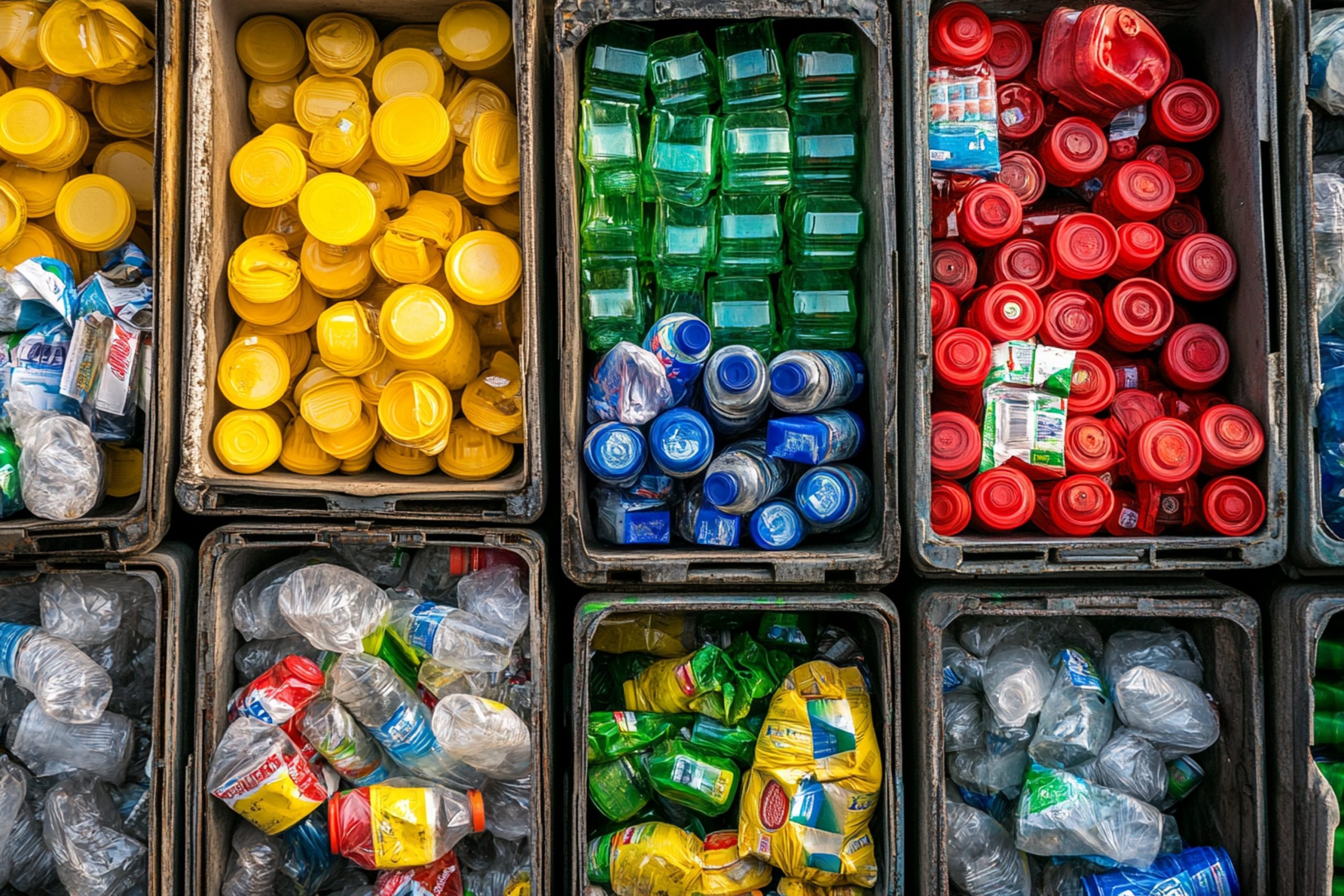
The U.S. plastics market is entering the next decade with a strong industrial base and a changing set of priorities. In 2025, the industry supported 1.7 million jobs and generated $533.6 billion in shipments, according to PLASTICS. More recently, U.S. production of major plastic resins reached 62.3 billion pounds in the first seven months of 2026, up 5.1% from the same period in 2025. By 2035, growth will increasingly be shaped by packaging, automotive and healthcare demand, advanced materials, recycled content, and investments in circularity.
Key Market Drivers Strengthening the Plastics Market in the US
Packaging Remains a Core Demand Engine
Packaging continues to underpin plastics demand because manufacturers value its combination of light weight, durability, flexibility, and cost efficiency. Food, beverages, healthcare, household products, and e-commerce will continue creating demand for both rigid and flexible formats. At the same time, packaging is becoming more demanding. Brands are looking for materials that perform well while using less virgin plastic and incorporating more recycled content. This is opening opportunities for recyclers, converters, resin producers, and companies developing recyclable or redesigned packaging.
Automotive, Construction and Advanced Applications
Plastics are finding wider use where manufacturers need lightweight, durable, corrosion-resistant, and technically precise materials. Automotive producers use polymers in components, interiors, electrical systems, and lightweight structures, while construction relies heavily on products such as piping, insulation, roofing, and building materials. Healthcare, electronics, and industrial applications provide another layer of demand. These markets increasingly require engineering and specialty plastics capable of meeting tighter performance, safety, and reliability requirements.
Recycling and Circularity Create a New Growth Layer
The next phase of the market will not be driven only by producing more plastic. It will also involve recovering and reusing more of what is already produced. EPA estimates that $36.5–$43.4 billion is needed to modernize U.S. recycling infrastructure by 2030. The investment could potentially recover an additional 82–89 million tons of packaging and organic waste and raise the national recycling rate from 32% to 61%. That gap represents a significant commercial opportunity for recycling infrastructure, sorting technologies, recycled-resin production, advanced recycling, and circular packaging solutions.
US Government Initiatives Strengthening the Plastics Demand
Government policy is increasingly focused on reducing plastic waste and strengthening the recycling system. EPA’s National Strategy to Prevent Plastic Pollution, published in 2024, outlines actions covering plastic production, product design, waste reduction, recycling, and pollution prevention. EPA also estimates that modernizing recycling infrastructure could require up to $43.4 billion by 2030, creating a sizeable investment pipeline for collection, sorting, processing, and end-market development.
Competitive Landscape of the US Plastics Industry
Competition spans resin producers, chemical companies, converters, packaging manufacturers, recyclers, and specialty-material suppliers. Commodity polymers remain important, while specialty and engineering plastics are gaining relevance in higher-performance applications. The scale of supply is substantial: major U.S. plastic-resin production totaled 9.0 billion pounds in July 2026, with year-to-date production up 5.1% year over year. Companies are increasingly competing on price, performance, supply reliability, recycled content, and circularity capabilities.
Market Challenges Slowing Down the Plastics Market Momentum in the US
Recycling Gaps
The biggest challenge is still the gap between plastic use and recovery. EPA’s latest detailed national plastics dataset found that only 8.7% of plastics in the municipal solid-waste stream were recycled in 2018, while 27 million tons went to landfills. Although infrastructure and recycling initiatives have advanced since then, collection, sorting, contamination, and inconsistent end markets remain barriers.
Cost and Regulatory Complexity
Producers must also manage volatile feedstock and energy costs alongside changing sustainability expectations. Different state-level requirements can add complexity, particularly for packaging producers operating across multiple markets.
Future Outlook
The future outlook of the U.S. Plastics Market is likely to become more segmented by value and application. High-volume polymers will remain essential, but faster strategic growth is likely to center on specialty materials, recycled resins, advanced recycling, lightweighting, and circular packaging. The opportunity is substantial as EPA estimates that modernizing the recycling system could recover 82–89 million additional tons of packaging and organic waste. In the coming years, companies that combine competitive costs with material innovation, reliable supply, recycling capabilities, and adaptable sustainability strategies will be better positioned to respond to changing customer and market requirements.
Consultants at Nexdigm, in their latest publication “US Plastics Market Outlook to 2035,” analyze the sector By Polymer Type (Polyethylene, High density Polyethylene, Low Density Polyethylene, Polypropylene, Polyurethane and Polyvinyl Chloride), By Product Form (Plastic Films and Sheets, Plastic Foams and Plastic Mold and Components), By Region (Louisiana, Texas and South-Central United States)
Nexdigm suggests that businesses in the US Plastics Market must prioritize advanced materials, circular manufacturing, and recycling capabilities while strengthening supply chain resilience. Companies should align investments with evolving sustainability requirements and pursue high-growth opportunities across packaging, automotive, construction, and healthcare applications.
To take the next step, simply visit our Request a Consultation page and share your requirements with us.
Harsh Mittal
+91-8422857704