
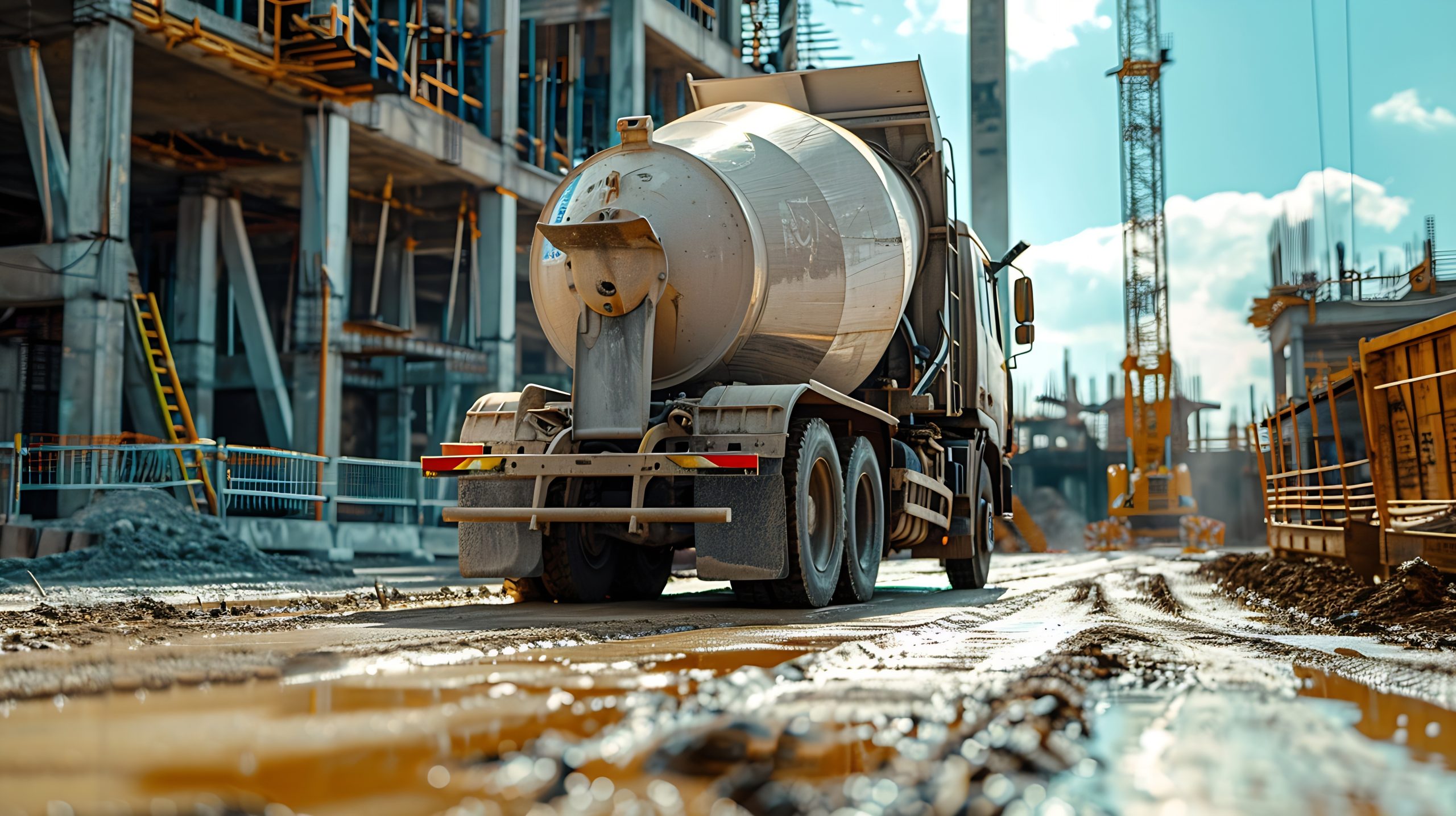
The US ready-mix concrete market plays a vital role in supporting residential, commercial, industrial, and infrastructure construction projects across the country. Ready-mix concrete offers consistent quality, reduced on-site labor requirements, and improved construction efficiency, making it a preferred material for large-scale developments. The market is supported by strong construction activity, public infrastructure investments, and growing urbanization. According to industry estimates, US ready-mixed concrete production reached approximately 379 million cubic yards, highlighting the scale of demand generated by highways, bridges, housing developments, and commercial construction projects throughout the nation.
Market Drivers Supporting US Ready-Mix Concrete Industry
Expanding Infrastructure Development
One of the primary growth drivers for the US ready-mix concrete market is the increasing investment in infrastructure modernization. Federal and state governments continue to allocate significant funding toward highways, bridges, airports, transit systems, and water infrastructure projects. These developments require substantial volumes of ready-mix concrete due to its durability, strength, and suitability for large-scale applications. Aging infrastructure across the country further fuels replacement and rehabilitation activities, creating sustained demand from both public and private sectors.
Growth in Residential and Commercial Construction
The expansion of residential housing projects and mixed-use commercial developments continues to support ready-mix concrete consumption. Population growth in states such as Texas, Florida, North Carolina, and Georgia has increased the need for housing, schools, healthcare facilities, and retail spaces. Ready-mix concrete remains a preferred building material because it offers faster project execution, improved quality control, and reduced material wastage. Increased investments in warehouses, data centers, and manufacturing facilities also contribute to rising demand.
Rising Production Across Key Construction States
Several states serve as major demand centers for the market due to their extensive construction activities. California alone produces approximately 33 million cubic yards of ready-mixed concrete annually, while Arizona and Colorado contribute significantly to regional demand. Growing urban expansion and large infrastructure pipelines in these regions support the continuous requirement for ready-mix concrete products and services.
Government Initiatives Supporting US Ready-Mix Concrete Sector
Government initiatives aimed at strengthening transportation networks, renewable energy infrastructure, public facilities, and urban development continue to stimulate concrete demand. Federal infrastructure investment programs encourage the construction and rehabilitation of roads, bridges, ports, and transit systems. Additionally, state-level investments in affordable housing and public utility upgrades are creating long-term opportunities for ready-mix concrete suppliers, manufacturers, and construction contractors across the US market.
Competitive Landscape of US Ready-Mix Concrete Industry
The US ready-mix concrete market is moderately consolidated, with major participants operating extensive batching plant networks across key regions. Companies compete through production capacity, logistics efficiency, product quality, and geographic presence. Leading suppliers focus on expanding plant infrastructure, adopting sustainable concrete technologies, and strengthening distribution networks to improve service levels. Strategic acquisitions and partnerships also remain common as companies seek to increase market share and regional coverage.
Challenges Affecting US Ready-Mix Concrete Growth
Volatility in Raw Material and Transportation Costs
Fluctuations in the prices of cement, aggregates, fuel, and transportation services can significantly impact operating margins. Since ready-mix concrete is highly time-sensitive, transportation efficiency remains critical for maintaining profitability and ensuring timely delivery to construction sites.
Environmental Compliance Requirements
The industry faces growing pressure to reduce carbon emissions and improve sustainability practices. Compliance with environmental regulations often requires investments in energy-efficient production facilities, alternative cementitious materials, and emission reduction technologies, increasing operational costs for manufacturers.
Future Outlook
The future of the US ready-mix concrete market remains positive, supported by sustained infrastructure investments, increasing urban development, and expanding industrial construction activities. Demand is expected to benefit from ongoing bridge rehabilitation, transportation modernization projects, housing developments, and commercial construction. The adoption of sustainable concrete solutions, low-carbon materials, and advanced batching technologies will further transform the industry. As construction spending continues to rise and project pipelines expand nationwide, ready-mix concrete is expected to remain a critical material underpinning the growth of the US construction sector.
Consultants at Nexdigm, in their latest publication “US Ready-Mix Concrete Market Outlook to 2035,” analyze the sector By Product Form (Market Definition and Scope, Ready-Mix Concrete Classification, Market Sizing Framework, Top-Down Market Reconstruction, Bottom-Up Plant-Level Assessment, Production-Volume Validation).
Nexdigm suggests that businesses in the US Ready-Mix Concrete Industry focus on expanding production capacity, adopting sustainable concrete solutions, and strengthening distribution networks. Companies should leverage infrastructure investments, enhance operational efficiency, and develop value-added products to capitalize on growing demand across residential, commercial, and industrial construction sectors.
To take the next step, simply visit our Request a Consultation page and share your requirements with us.
Harsh Mittal
+91-8422857704