
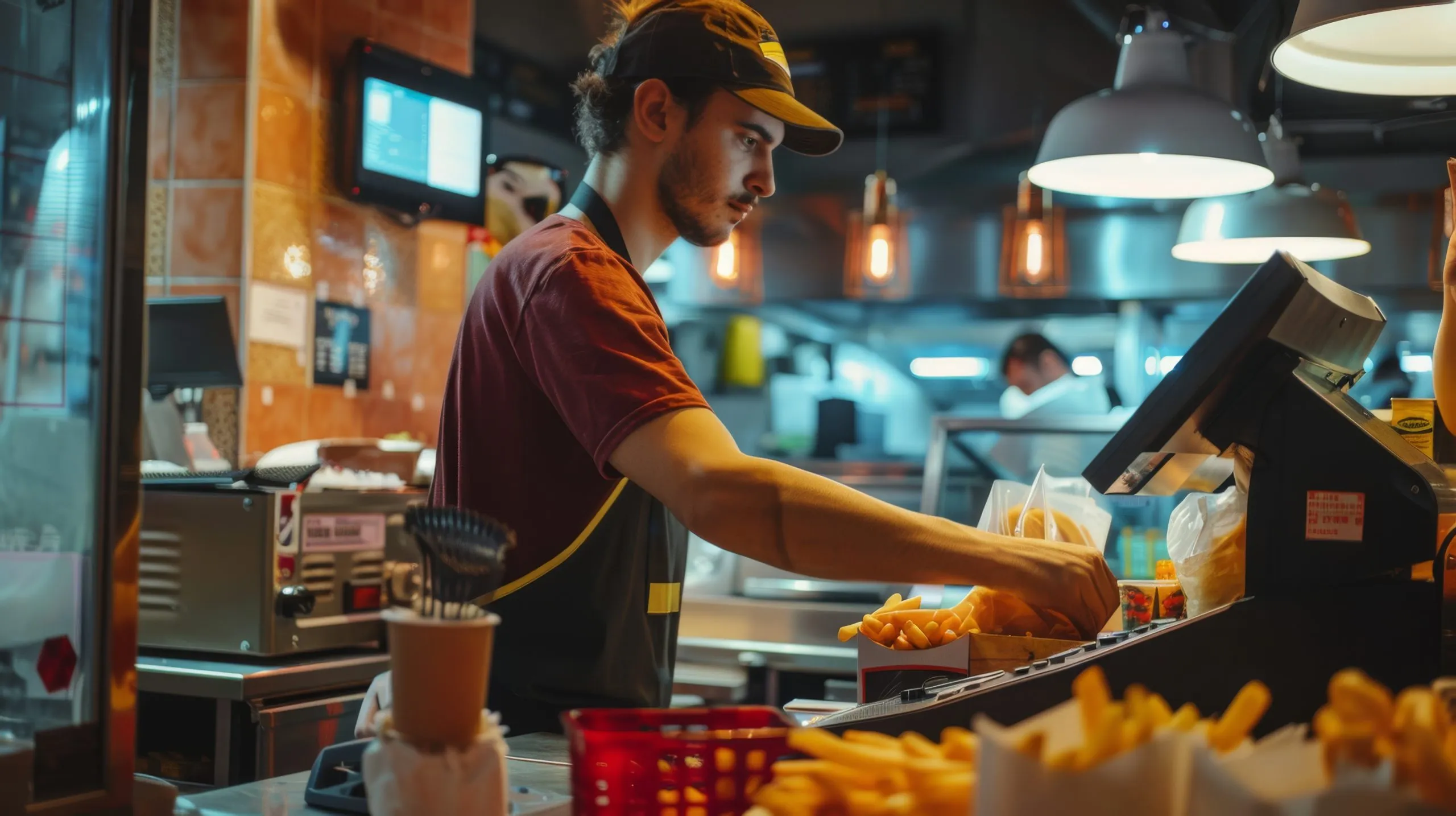
The USA quick service restaurant market is expanding as consumers continue to prioritize convenience, value, speed, and flexible meal options. Quick service restaurants have become a daily part of American dining, supported by drive-thru lanes, mobile apps, delivery platforms, loyalty programs, and affordable menu bundles. The market was valued at around USD 447.20 billion in 2025 and is projected to reach USD 789.65 billion by 2031. As brands adapt to changing lifestyles and digital habits, QSRs are becoming more technology-driven, data-focused, and customer-centric.
Key market drivers are reshaping the USA quick service restaurant industry
Digital ordering is changing how consumers access meals
Digital ordering has become one of the strongest growth drivers in the USA QSR market. Mobile apps, self-service kiosks, third-party delivery platforms, QR ordering, and loyalty-based ordering systems are making the customer journey faster and more personalized. Digital ordering now accounts for more than 40% of chain transactions, showing how deeply technology has entered everyday dining. Customers prefer the ability to customize meals, track orders, earn rewards, and reorder favorites with minimal friction. For restaurant operators, digital channels also provide valuable data on customer preferences, pricing, promotions, and menu performance.
Drive-thru, takeaway, and delivery formats are supporting convenience demand
Off-premise dining remains central to QSR growth in the U.S. Drive-thru, takeaway, curbside pickup, and delivery formats account for more than 70% of revenue at leading brands, reflecting consumers’ preference for speed and flexibility. Busy work schedules, suburban lifestyles, commuting patterns, and family meal occasions continue to support demand for convenient food options. Many QSR brands are redesigning stores with smaller dining rooms, double drive-thru lanes, pickup shelves, and delivery-only access points. This shift is helping operators serve more customers while improving throughput and order accuracy.
Value meals and menu innovation are keeping customers engaged
Value remains important as consumers balance convenience with affordability. QSR brands are using meal deals, combo offers, limited-time menus, breakfast options, premium burgers, chicken products, beverages, and snackable items to retain customer interest. Menu innovation helps brands respond to changing tastes while protecting traffic during periods of inflation. Health-conscious options, plant-based trials, regional flavors, and customizable meals are also creating new ways to appeal to different consumer groups.
Government policies and labour regulations are influencing operations
Government policies related to wages, food safety, franchising, nutrition labelling, employment rules, and environmental standards are influencing the USA QSR market. Minimum wage changes in several states, labour regulations, and workplace compliance requirements can affect operating costs and staffing models. Food safety standards and menu labelling rules also shape how restaurants manage ingredients, disclosures, and quality control. At the same time, infrastructure investment, small business support, and workforce training programs can indirectly support restaurant expansion and franchise operations.
Competitive landscape is becoming more digital and experience focused
The USA QSR market is highly competitive, with major global chains, regional brands, franchise operators, fast-casual players, delivery-first concepts, and convenience-store foodservice competing for consumer spending. Competition is shaped by price, speed, menu variety, location access, digital experience, loyalty programs, and brand trust. Large chains benefit from scale, advertising power, supply chain strength, and technology investments. Smaller and regional brands compete through local flavors, niche positioning, freshness, and differentiated customer experiences.
Market challenges continue to pressure margins and operations
Labour costs and staffing constraints remain major concerns
QSR operators continue to face labour availability issues, wage pressures, turnover, and training costs. These pressures can affect service speed, order accuracy, and profitability. Many brands are investing in automation, scheduling tools, and simplified kitchen operations to improve efficiency.
Food inflation and price sensitivity affect consumer demand
Rising ingredient, packaging, rent, and utility costs can pressure margins and menu pricing. While QSRs are known for affordability, frequent price increases may affect traffic from value-conscious consumers. Operators need careful pricing, promotions, and portion strategies to protect demand.
Future outlook
The future outlook for the USA quick service restaurant market remains positive, supported by digital ordering, off-premise dining, loyalty programs, automation, and continued demand for convenient meals. The market is projected to reach USD 789.65 billion by 2031, reflecting strong long-term potential. Growth opportunities are expected in AI-enabled kitchens, personalized promotions, drive-thru optimization, delivery partnerships, value-led menus, and data-driven customer engagement. Businesses that invest in technology, operational efficiency, menu relevance, and customer experience will be better positioned to capture future growth.
Consultants at Nexdigm, in their latest publication “USA quick service restaurant market outlook to 2035,” analyze the sector By Product Type (Burgers and Sandwiches, Pizza and Pasta, Chicken-based QSR, Mexican and Tex-Mex), By Service Model (Dine-in, Takeaway, Drive-thru)
Nexdigm suggests that businesses in the USA quick service restaurant market should focus on digital ordering, drive-thru efficiency, and loyalty-led customer engagement to improve convenience and retention.
To take the next step, simply visit our Request a Consultation page and share your requirements with us.
Harsh Mittal
+91-8422857704