
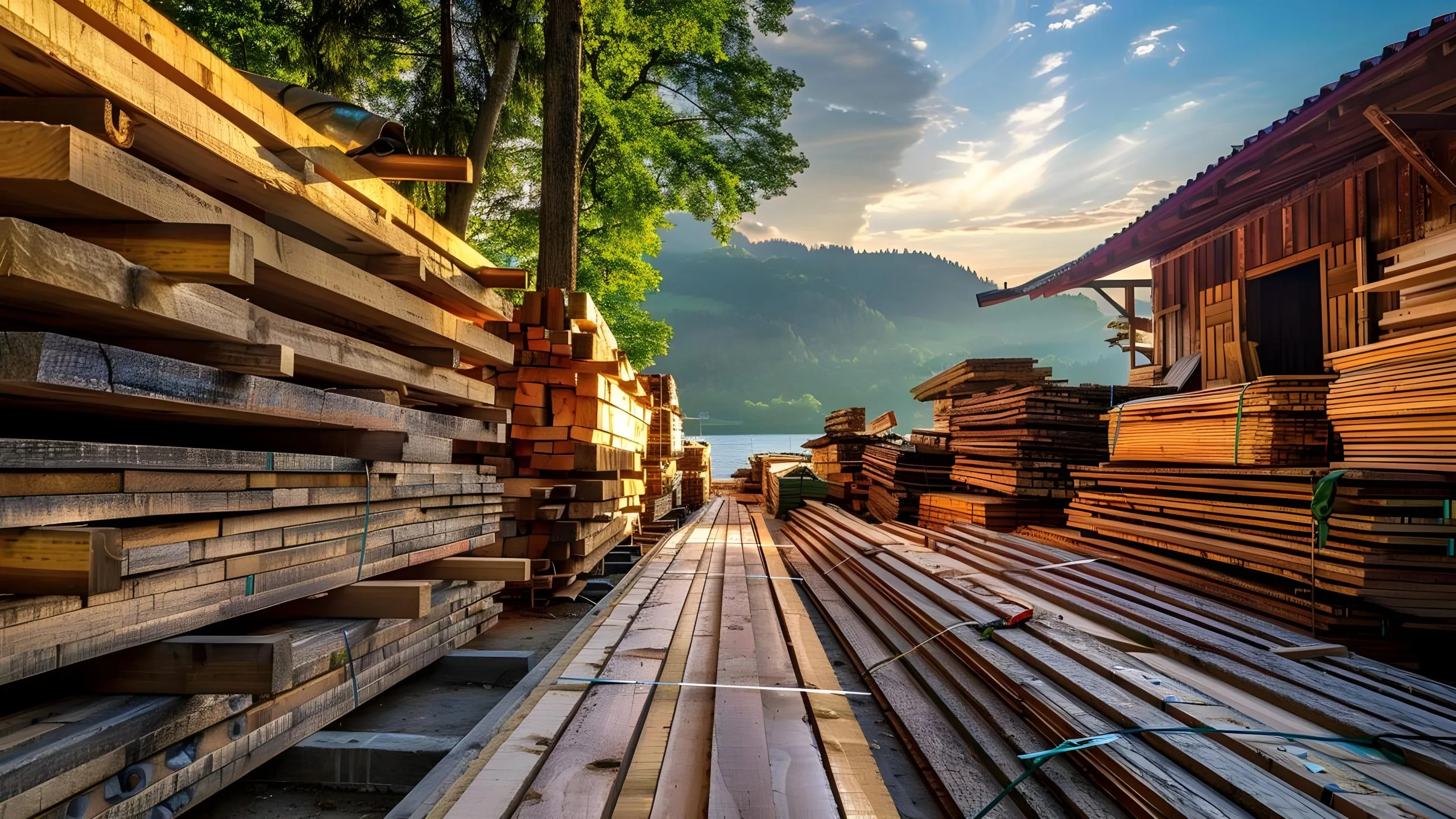
The USA sawnwood market remains an important part of the country’s construction, furniture, packaging, remodeling, and industrial wood products ecosystem. Sawnwood is widely used in framing, flooring, decking, furniture, cabinetry, pallets, crates, and structural applications because it offers strength, workability, renewability, and cost efficiency. The U.S. sawnwood market revenue reached USD 23.6 billion, while consumption is projected to move toward 96 million cubic meters at 1.3% CAGR. Demand is being supported by residential construction, repair and remodeling activity, engineered wood use, and growing interest in low-carbon building materials.
Key market drivers are strengthening sawnwood demand in the USA
Housing and remodeling activity continue to support core demand
Residential construction remains one of the largest demand drivers for sawnwood in the USA. Lumber is essential for framing, roof structures, subfloors, wall systems, decking, fencing, and interior applications. Even when new homebuilding slows, repair and remodeling activity continues to support steady demand, as homeowners invest in renovations, extensions, outdoor living spaces, kitchens, flooring, and structural upgrades. Sawnwood is also important for multifamily housing and suburban development, where contractors need materials that are available, familiar, and easy to work with. The U.S. sawnwood market revenue rose 5.1%, showing continued value growth despite cyclical pressure in housing and construction.
Furniture, packaging, and industrial uses are expanding market relevance
Beyond construction, sawnwood is widely used in furniture, cabinetry, millwork, pallets, crates, and industrial packaging. The growth of e-commerce, warehousing, food distribution, manufacturing, and export-oriented logistics has increased the need for wooden pallets and packaging materials. Non-coniferous sawnwood revenue in the USA reached USD 8.3 billion, up 12%, while production reached 16 million cubic meters. Hardwood products are particularly important for furniture, flooring, cabinets, doors, decorative panels, and premium interiors. As consumer preferences shift toward natural finishes and durable materials, sawnwood continues to hold relevance across both mass-market and higher-value applications.
Sustainability and timber-based construction are improving material appeal
Wood is increasingly seen as a renewable construction material when sourced responsibly. Growing interest in carbon-conscious buildings, mass timber, certified wood, and circular material use is encouraging builders, architects, and developers to reconsider timber-based solutions.
Government forestry and housing initiatives are supporting market stability
Government programs linked to forestry management, wildfire risk reduction, rural development, housing supply, infrastructure investment, and sustainable building practices influence the USA sawnwood market. Policies supporting domestic timber harvesting, forest restoration, and responsible land management can improve raw material availability while also addressing environmental concerns. Housing and infrastructure initiatives indirectly support lumber demand by encouraging construction, renovation, and public works activity. In addition, building codes that recognize engineered wood and mass timber applications can expand opportunities for sawnwood-linked products. These measures help connect forest resources, manufacturing capacity, and construction demand.
Competitive landscape is shaped by mills, distributors, and integrated wood product companies
The USA sawnwood market includes large timberland owners, sawmills, integrated forest product companies, hardwood producers, softwood lumber manufacturers, wholesalers, building material distributors, retailers, and specialty wood suppliers. Competition is shaped by log access, mill efficiency, grade consistency, moisture control, pricing, transportation costs, certification, and customer relationships. Suppliers serve builders, contractors, furniture makers, pallet manufacturers, retailers, and industrial buyers. Companies with efficient mills, diversified product grades, reliable distribution networks, and sustainable sourcing credentials are better positioned to manage market cycles and maintain long-term customer trust.
Market challenges continue to affect supply, pricing, and profitability
Price volatility can disrupt buyer planning
Sawnwood prices can fluctuate because of housing cycles, interest rates, weather events, mill closures, trade policy, transportation costs, and raw log availability. This creates planning challenges for builders, retailers, and manufacturers.
Forest health and labor constraints remain operational concerns
Wildfires, pests, drought, forest management limits, and labor shortages can affect timber supply and mill operations. These issues may increase costs and reduce production flexibility in certain regions.
Future outlook
The future outlook for the USA sawnwood market remains steady, supported by housing needs, renovation activity, furniture demand, packaging growth, and interest in sustainable timber-based construction. Global sawnwood output stood at 445 million cubic meters, with North America contributing 129 million cubic meters, highlighting the region’s strong production base. Opportunities are expected across softwood framing lumber, hardwood flooring, decking, millwork, furniture lumber, pallets, engineered wood inputs, certified wood, and mass timber-linked applications. Businesses that invest in mill productivity, supply reliability, sustainable forestry, digital inventory systems, and value-added wood products will be better positioned for long-term growth.
Consultants at Nexdigm, in their latest publication “USA sawnwood market outlook to 2035,” analyze the sector By Wood Species Type (Southern Yellow Pine Sawnwood, Douglas Fir Sawnwood, Spruce-Pine-Fir Sawnwood, Hem-Fir Sawnwood), By Product Form (Rough Sawn Lumber, Planed Sawnwood, Kiln-Dried Sawnwood)
Nexdigm suggests that businesses in the USA sawnwood market should focus on sustainable, cost-efficient, and application-specific wood products that support demand across housing construction, renovation, furniture, packaging, and timber-based building solutions.
To take the next step, simply visit our Request a Consultation page and share your requirements with us.
Harsh Mittal
+91-8422857704