
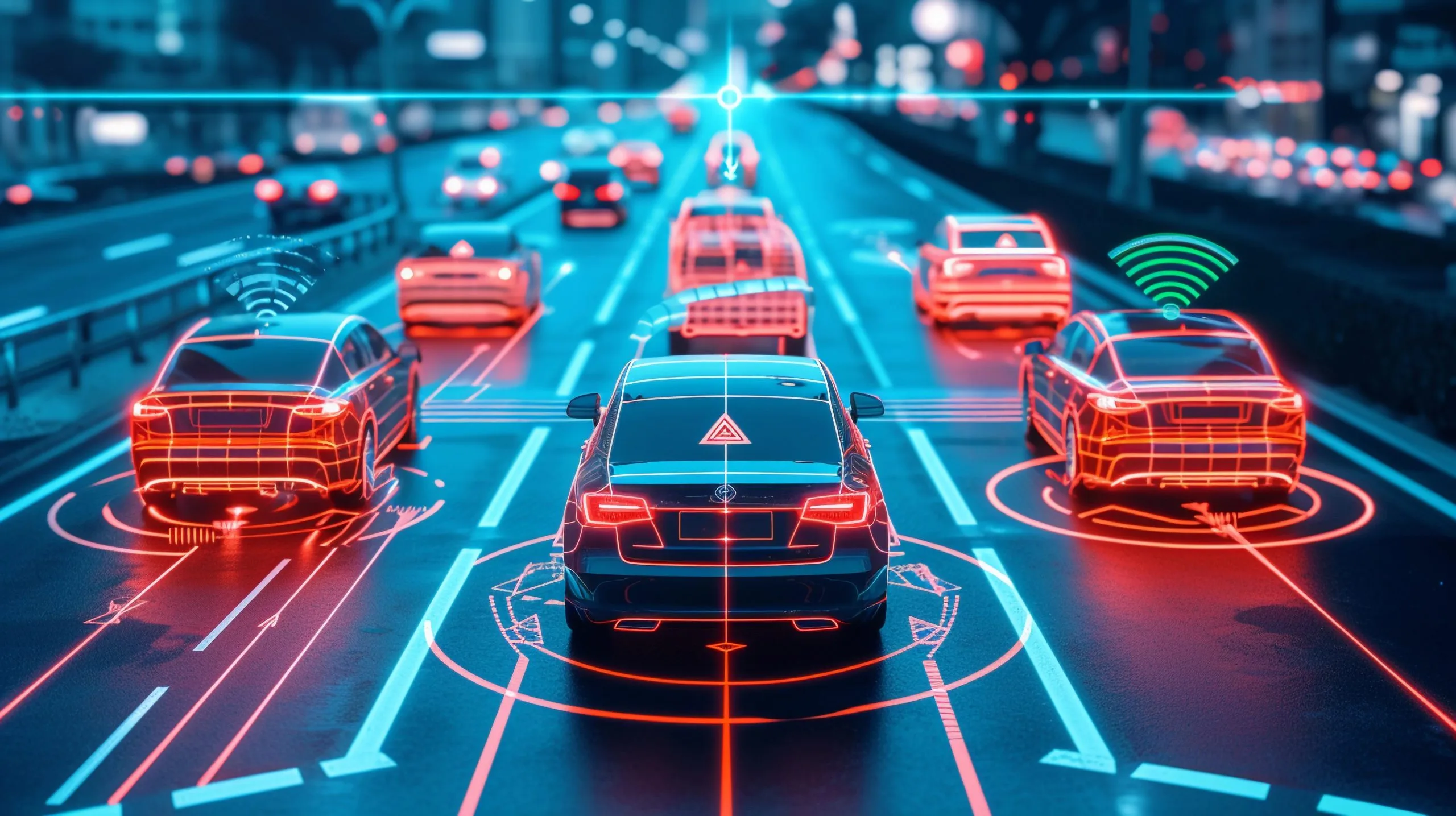
Vehicle‑to‑Everything (V2X) communication refers to the wireless exchange of information between vehicles and their environment—including other vehicles, infrastructure, networks, and pedestrians—to improve road safety, traffic efficiency, and energy use. In the United States, V2X technologies are gaining traction as connected and autonomous vehicle programs expand and advanced communication standards like Cellular V2X (C‑V2X) are deployed. The broader automotive V2X market is forecast to grow significantly through 2030, supported by investments in 5G, smart infrastructure, and safety‑centric applications that reduce collisions and congestion.
Key Factors Fueling Growth in the V2X Communication Market
Safety and Traffic Efficiency
One of the primary drivers of the U.S. V2X market is the focus on improving road safety and reducing traffic incidents. V2X enables real‑time communication between vehicles (V2V), and between vehicles and infrastructure (V2I), which can help anticipate hazards and alert drivers or automated systems. The U.S. Department of Transportation and other agencies have highlighted V2X’s potential to significantly reduce traffic accidents and related fatalities, making safety improvements a key value proposition.
Connected and Autonomous Vehicle Programs
The expansion of connected and autonomous vehicle (CAV) research and pilot programs is driving demand for V2X technologies. These systems are integral to advanced driver assistance systems (ADAS) and future autonomous mobility services, offering low‑latency communication necessary for coordinated driving and collision avoidance. The rollout of 5G networks further strengthens this driver by enabling high‑speed, reliable data exchange across vehicles and infrastructure.
Smart Infrastructure and Regulatory Momentum
Growing investments in smart transportation infrastructure at federal and state levels support V2X deployment. Funding for roadside units, digital traffic management systems, and spectrum allocation for intelligent transportation systems are incentivizing industry adoption. Regulatory support, including grant programs and pilot deployments in multiple states, is helping create the ecosystem needed for widespread V2X integration.
Government Policies and Initiatives Driving V2X Adoption
U.S. government agencies are actively promoting V2X adoption through research funding and pilot initiatives. The U.S. Department of Transportation has supported connected vehicle technology programs designed to demonstrate safety and interoperability benefits. Continued spectrum allocation and infrastructure grants aim to accelerate V2X deployment across urban and rural corridors, positioning V2X as a cornerstone of national transportation modernization strategies.
Key Players and Strategic Partnerships in the V2X Communication Market
The V2X market includes major technology and automotive players investing in communication hardware, software platforms, and integrated solutions. Key contributors span semiconductor firms developing C‑V2X chipset solutions and OEMs implementing V2X modules in production vehicles. Partnerships between Tier‑1 suppliers, carriers, and infrastructure providers are shaping competitive dynamics, with emphasis on interoperability, standards alignment, and scalability of deployed systems.
Key Challenges Hindering the Growth of the V2X Communication Market
Standardization and Interoperability
A major challenge is the coexistence of multiple communication standards (e.g., DSRC vs. C‑V2X) and the need for regulatory clarity on spectrum usage. Ensuring interoperability across vehicle and infrastructure systems remains a barrier to uniform adoption.
Security and Privacy
Concerns about the security of V2X communication channels and protection of user data could slow adoption. Robust cybersecurity frameworks are required to safeguard V2X systems against malicious attacks and ensure trust among users and stakeholders.
Future Outlook
Through 2030, the U.S. V2X market is expected to expand significantly, with several market forecasts projecting multi‑billion‑dollar growth driven by safety applications, connected mobility, and smart infrastructure integration. As connected and autonomous vehicles mature, V2X will form a fundamental part of vehicle communication ecosystems. Federal initiatives, wider 5G availability, and collaboration across industry and public sectors are likely to support broader deployment and commercialization of V2X technologies. Continued progress in standards, security, and interoperability will determine the pace of adoption in the automotive and transportation sectors.
Consultants at Nexdigm, in their latest publication “USA Vehicle‑to‑Everything (V2X) Communication Market Outlook 2030,” analyze the sector by Communication Technology (DSRC (IEEE 802.11p), Cellular V2X (LTE-V2X), 5G NR-V2X), By Communication Type (Vehicle-to-Vehicle (V2V), Vehicle-to-Infrastructure (V2I), Vehicle-to-Pedestrian (V2P)), and By Component (On-board units and telematics control units, Roadside units and intersection controllers, Chipsets and modems). Nexdigm suggests that businesses should embrace emerging technologies and regulatory frameworks to remain competitive in the rapidly evolving Vehicle-to-Everything (V2X) communication market. By focusing on advancements in safety features, leveraging government incentives, and fostering strategic partnerships, companies can ensure they meet market demands while navigating challenges such as standardization and security. This proactive approach will position businesses to capitalize on the growing adoption of connected and autonomous vehicles, facilitating long-term growth and industry leadership.
To take the next step, simply visit our Request a Consultation page and share your requirements with us.
Harsh Mittal
+91-8422857704