
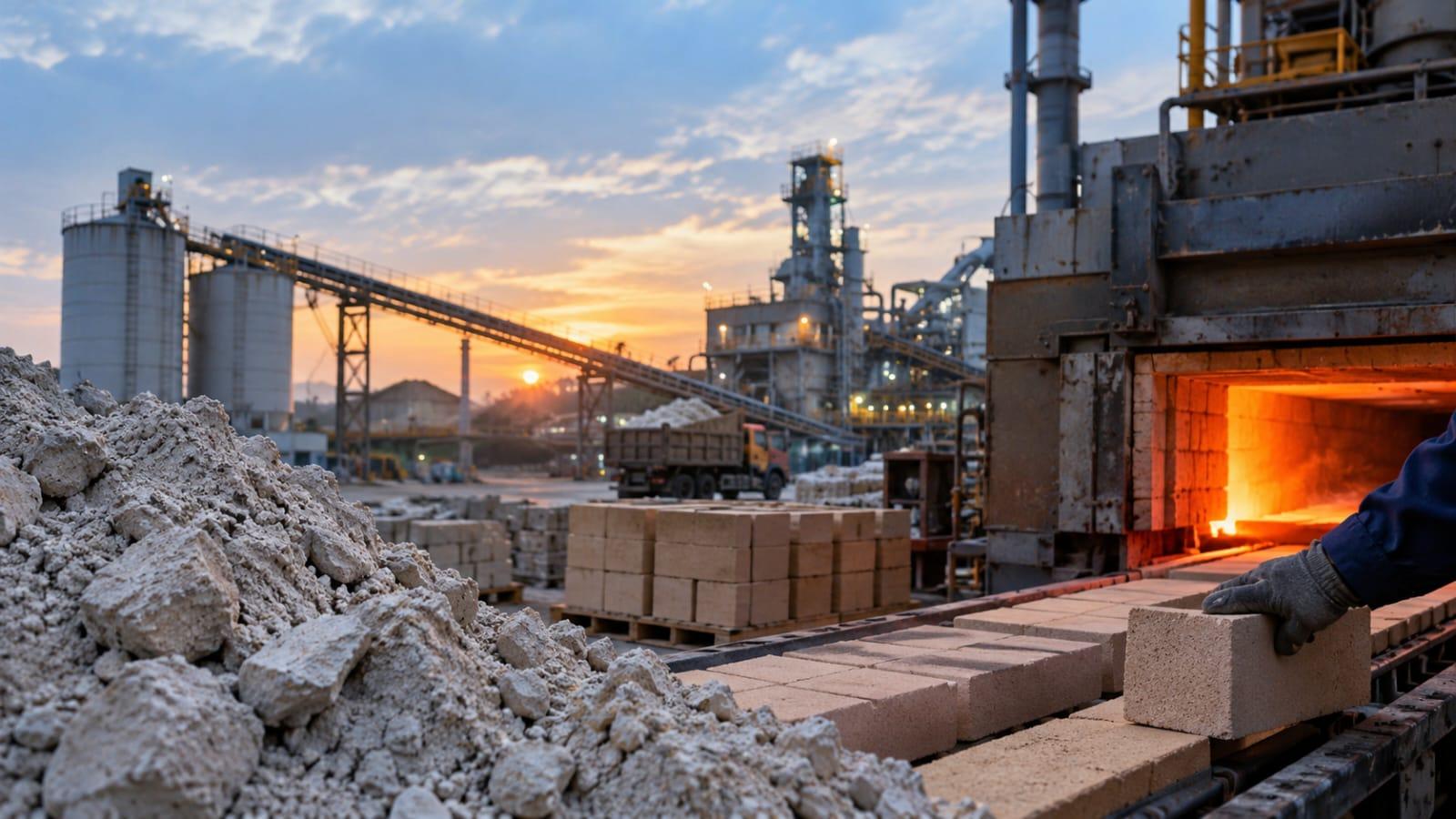
Vietnam’s fire clay market plays a vital role in supporting the country’s growing industrial ecosystem. Fire clay is widely used in refractory products required for steel production, cement manufacturing, ceramics, glass processing, and other high-temperature applications. Rising industrial activity, infrastructure development, and manufacturing expansion are strengthening demand for refractory materials across the country. Vietnam’s industrial production index recorded growth of approximately 8.4%, while manufacturing and processing activities expanded by around 9.6%, creating favorable conditions for the fire clay industry. As industrial clusters continue to expand, the market is expected to witness sustained growth.
Market Drivers Supporting Vietnam Fire Clay Industry
Expanding Industrial Production and Manufacturing Activities
Vietnam’s rapid industrialization remains one of the primary drivers of fire clay demand. The country’s industrial production index increased by approximately 8.4%, reflecting strong growth across multiple industrial sectors. Manufacturing and processing activities also expanded by nearly 9.6%, highlighting increased consumption of refractory materials used in furnaces, kilns, and thermal processing units. Industries such as steel, cement, glass, and ceramics rely heavily on refractory products made from fire clay to withstand extreme temperatures. As production capacities rise within these sectors, demand for high-quality fire clay continues to grow. Increasing domestic manufacturing output also encourages investments in industrial facilities that require refractory lining solutions.
Growth of Construction Materials and Infrastructure Development
The expansion of Vietnam’s construction and infrastructure sectors contributes significantly to market growth. Large-scale residential, commercial, and industrial projects continue to stimulate demand for cement, ceramics, and glass products, all of which utilize refractory systems during manufacturing. Companies operating in construction materials manufacturing are expanding production capacities to meet rising demand. This trend directly supports the need for fire clay-based refractory materials, creating consistent opportunities for suppliers across the value chain.
Development of Industrial Clusters and Manufacturing Hubs
Major industrial hubs including Hanoi, Hai Phong, Quang Ninh, Binh Duong, Dong Nai, and Ba Ria-Vung Tau serve as important centers for refractory consumption. These regions host numerous manufacturing facilities, steel plants, cement factories, and industrial processing units. The concentration of industries within these clusters improves supply chain efficiency and increases demand for refractory products. Proximity to ports and logistics infrastructure further supports industrial expansion, strengthening the long-term outlook for the fire clay market.
Government Initiatives Vietnam Fire Clay Sector
The Vietnamese government continues to promote industrial development through policies focused on manufacturing expansion, infrastructure modernization, and foreign investment attraction. Investments in industrial parks, transportation networks, and export-oriented manufacturing facilities are creating a strong foundation for heavy industries. Additionally, initiatives supporting domestic production and industrial modernization encourage higher consumption of refractory materials, indirectly benefiting the fire clay market as industrial output continues to rise.
Competitive Landscape of Vietnam Fire Clay Industry
The Vietnam fire clay market consists of both domestic refractory manufacturers and regional suppliers serving industrial customers. Market participants focus on product quality, supply reliability, and long-term partnerships with steel, cement, ceramics, and glass producers. Companies such as Viglacera play an important role in construction-material manufacturing, while refractory solution providers support various industrial furnace applications. Competitive strategies increasingly include capacity expansion, technological improvements, and customized refractory products tailored to specific industrial requirements.
Challenges Affecting Vietnam Fire Clay Growth
Volatility in Raw Material and Energy Costs
The production and processing of refractory materials are energy-intensive activities. Fluctuations in raw material prices, fuel costs, and transportation expenses can impact profit margins for manufacturers and suppliers operating in the fire clay market.
Environmental and Regulatory Compliance
Industrial manufacturers are facing increasing pressure to improve environmental performance and reduce emissions. Compliance with evolving environmental regulations may require additional investments in cleaner production technologies, energy-efficient processes, and waste management systems, potentially increasing operational costs.
Future Outlook
The future of Vietnam’s fire clay market remains positive, supported by sustained industrialization, manufacturing growth, and increasing demand from high-temperature processing industries. Expanding steel, cement, ceramics, and glass production capacities are expected to generate consistent demand for refractory materials. Continued development of industrial parks and manufacturing hubs will further strengthen market opportunities across key regions. As industries prioritize operational efficiency and durability in thermal processing systems, fire clay is likely to remain an essential raw material within Vietnam’s industrial value chain, supporting steady market expansion over the coming years.
Consultants at Nexdigm, in their latest publication “ Vietnam Fire Clay Market Outlook to 2035 ,” analyze the sector By Product Form (Market Definition and Scope, Fire Clay Classification, Fireclay Grade Mapping, Alumina Content Assessment, Refractoriness and PCE Evaluation).
Nexdigm suggests that businesses in the Vietnam Fire Clay Industry focus on increasing demand from refractory, ceramics, construction, and industrial manufacturing sectors. Companies can capitalize on opportunities through efficient resource utilization, advanced processing technologies, and the growing need for high-temperature resistant materials supporting industrial expansion and infrastructure development.
To take the next step, simply visit our Request a Consultation page and share your requirements with us.
Harsh Mittal
+91-8422857704