
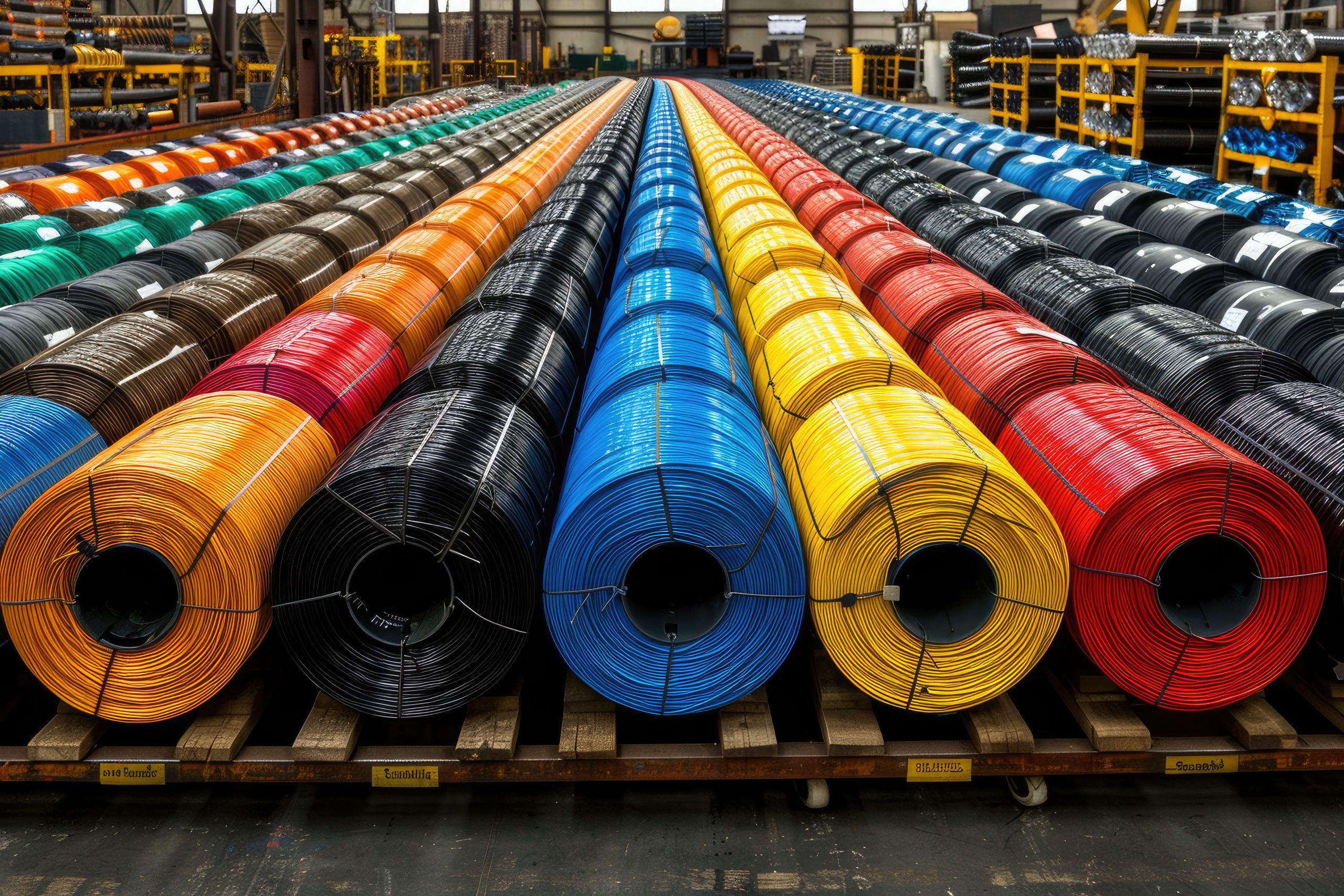
Vietnam’s flexible pipe market is gaining relevance as offshore gas development, subsea infrastructure, and energy-security investments accelerate. Flexible pipes can support offshore applications where operators require corrosion resistance, installation flexibility, and reliable performance under demanding marine conditions. A major infrastructure catalyst is the Block B–O Mon gas pipeline project, valued at approximately US$1.28 billion. The system spans about 431 km, including 329 km offshore and 102 km onshore, highlighting the scale of pipeline development underway in Vietnam’s energy sector.
Key Factors Driving Vietnam’s Flexible Pipe Industry Growth
Offshore Gas Projects Are Expanding Subsea Infrastructure Requirements
Vietnam’s offshore gas resources are becoming increasingly important to national energy supply. Projects involving offshore production platforms, subsea wells, pipelines, and processing facilities create potential demand for specialized flexible pipe systems used in risers, flowlines, jumpers, and complex subsea connections. The Block B–O Mon development illustrates this opportunity. The project is designed to transport approximately 5.06 billion cubic metres of gas annually from offshore fields to power and industrial users. Recoverable resources are estimated at around 107 billion cubic metres of gas along with 12.65 million barrels of condensate. As offshore developments move into deeper and more technically challenging waters, demand for flexible, fatigue-resistant, and corrosion-resistant pipe technologies could strengthen.
Large Pipeline Projects Are Strengthening Vietnam’s Energy Infrastructure
Vietnam is investing in pipeline networks to connect offshore resources with onshore power-generation centres. The Block B–O Mon pipeline alone will extend 431 km, creating a significant engineering and construction opportunity across offshore and land-based infrastructure. Construction activity is progressing. During the latest implementation phase, contractors targeted approximately 80 km of offshore pipe laying and around 50 km of trenching and installation work for the onshore pipeline. This broader infrastructure expansion can benefit flexible pipe suppliers, engineering contractors, coating companies, inspection providers, and offshore installation specialists.
Government Initiatives Supporting Vietnam’s Flexible Pipe Market
Vietnam’s government is prioritizing major gas-to-power developments as part of its energy-security strategy. The Block B–O Mon project is expected to deliver first gas around late 2026 to early 2027 and eventually supply gas to power facilities with approximately 3,800 MW of installed capacity. National energy planning also emphasizes maximizing existing oil and gas infrastructure while developing additional gas and LNG capacity, supporting continued investment in pipelines and associated offshore equipment.
Competitive Landscape of Vietnam’s Flexible Pipe Industry
Vietnam’s flexible pipe industry includes domestic energy groups, offshore engineering contractors, pipeline specialists, international technology providers, and subsea service companies. Competition increasingly revolves around pressure resistance, corrosion protection, fatigue performance, installation capability, project execution, and lifecycle reliability. Petrovietnam-linked companies including PTSC, PV GAS, PV GAS COATING, and SWPOC are playing important roles in major pipeline developments. International suppliers can compete by providing advanced flexible pipe technologies, engineering expertise, subsea integration, inspection services, and specialized materials.
Challenges Affecting Vietnam’s Flexible Pipe Market
Advanced Offshore Projects Require Significant Investment
Deepwater and offshore pipeline systems involve complex engineering, specialized vessels, qualified materials, and rigorous safety requirements. These factors can raise project costs and lengthen development schedules.
Dependence on Specialized Technologies Remains a Constraint
Certain high-performance flexible pipes, subsea systems, and engineering capabilities may require international technology and specialized components. Material-price volatility and transportation costs also remain concerns; Petrovietnam has cited rising material, equipment, and logistics costs as challenges during pipeline construction.
Future Outlook
Looking ahead, Vietnam’s flexible pipe industry could benefit from a much broader transformation of the country’s offshore energy system. Major gas developments are moving from planning into construction, while future LNG and offshore infrastructure requirements are expanding the addressable market for advanced piping solutions. As projects become technically more demanding, businesses offering corrosion-resistant materials, flexible subsea systems, engineering support, and reliable installation capabilities should find stronger opportunities across Vietnam’s evolving energy infrastructure.
Consultants at Nexdigm, in their latest publication “Vietnam Flexible Pipe Market Outlook to 2035,” analyze the sector By Product Type (Bounded, Unbounded Flexible Pipes, Flexible Jumpers, Risers and Flowlines), By Application (Offshore Oil and Gas Production, Shale Oil and Gas Production, Mining Slurry Transportation and Chemical Transfer Systems).
Nexdigm suggests that businesses in Vietnam’s Flexible Pipe Industry should strengthen advanced material capabilities, invest in fatigue-resistant technologies, build strategic partnerships with offshore operators, and improve lifecycle services to capture growing demand from complex offshore developments.
To take the next step, simply visit our Request a Consultation page and share your requirements with us.
Harsh Mittal
+91-8422857704