
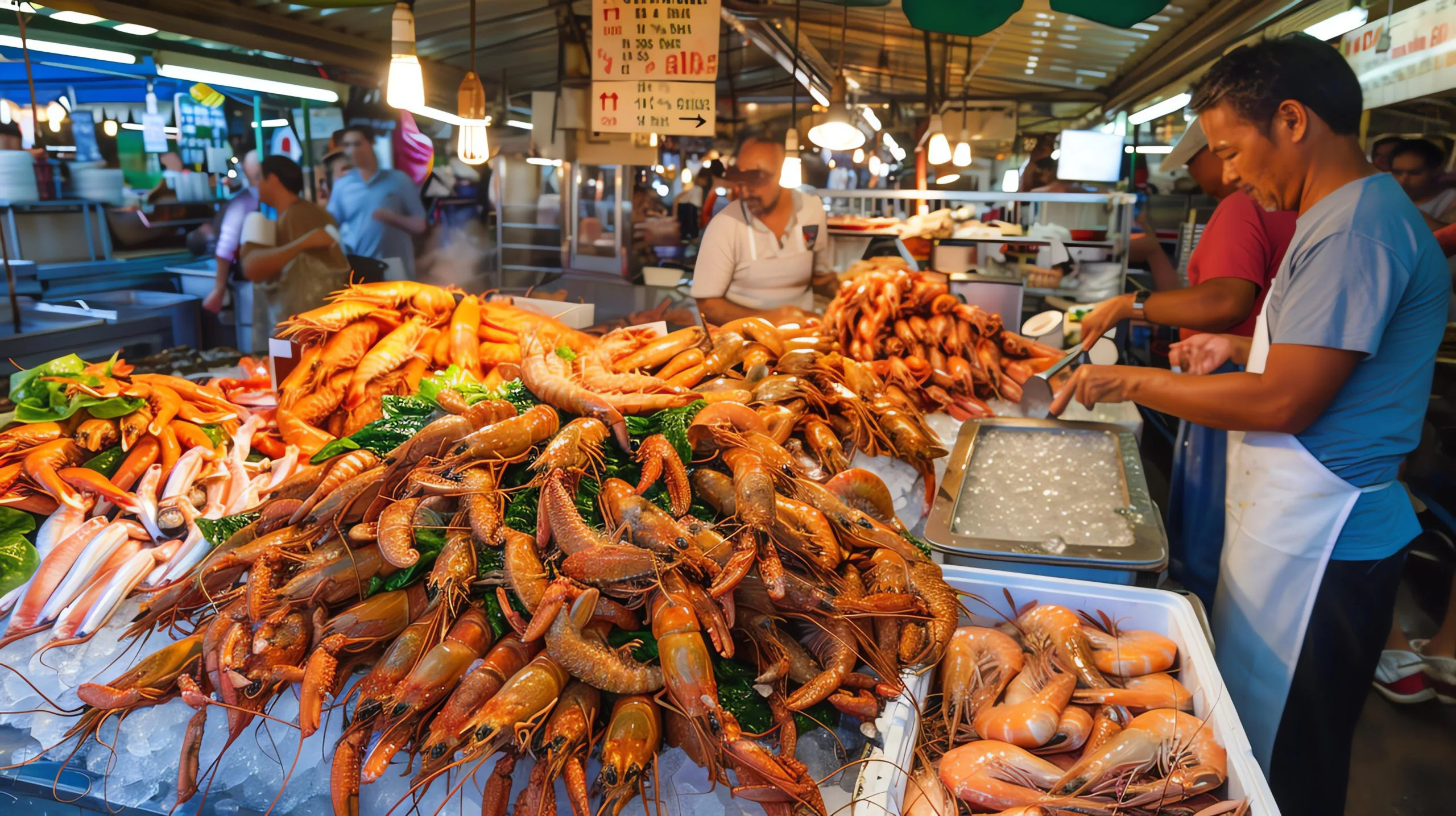
The Vietnam shrimp market is an important part of the country’s seafood economy, supported by aquaculture production, export competitiveness, processing capacity, and rising demand for value-added seafood. Vietnam is one of the major shrimp suppliers in global markets, with strong capabilities in whiteleg shrimp, black tiger shrimp, frozen products, and processed seafood. The market was valued at around USD 371.9 million in 2025 and is projected to reach USD 503.8 million by 2034. As producers and exporters focus on quality, traceability, and sustainability, shrimp remains central to Vietnam’s aquaculture growth.
Key market drivers are strengthening Vietnam’s shrimp industry
Aquaculture production is supporting consistent shrimp supply
Aquaculture remains the foundation of Vietnam’s shrimp market. The country has strong shrimp farming clusters in the Mekong Delta and coastal provinces, where farmers produce whiteleg shrimp and black tiger shrimp for both export and domestic use. Vietnam’s shrimp production reached about 1.29 million tons, including nearly 980,000 tons of whiteleg shrimp, showing the scale of its farming base. Producers are increasingly adopting better pond management, disease control, water monitoring, and intensive farming systems to improve survival rates and yields. These improvements are helping Vietnam maintain its role as a reliable global shrimp supplier.
Export demand is driving processing and value addition
Exports are one of the strongest growth drivers for Vietnam’s shrimp industry. Shrimp exports reached around USD 4.6 billion in 2025, supported by demand from the United States, Japan, China, South Korea, and Europe. Vietnam has built strong processing capabilities, especially in frozen shrimp, cooked shrimp, peeled shrimp, breaded shrimp, and ready-to-cook seafood products. Value-added shrimp products help exporters improve margins and reduce dependence on bulk commodity sales. As global buyers seek traceable and convenient seafood, Vietnam’s processing advantage is becoming more important.
Sustainability and certification are shaping buyer preferences
International seafood buyers are placing greater emphasis on responsible sourcing, certification, traceability, and environmental management. This is encouraging Vietnamese shrimp producers to adopt improved farming standards, better feed practices, reduced chemical use, and stronger documentation. Certified and responsibly sourced shrimp can help exporters access premium markets and strengthen buyer trust. As sustainability expectations increase, companies that can prove transparency across farms, processors, and exporters are likely to gain a competitive edge.
Government support and initiatives are improving aquaculture competitiveness
Government support is helping Vietnam strengthen aquaculture production, seafood exports, and rural livelihoods. Policies focused on sustainable aquaculture, export promotion, disease control, infrastructure development, and food safety are important for shrimp sector growth. Authorities have also supported improvements in farming practices, traceability systems, and quality standards to meet international market requirements. These initiatives are especially relevant as Vietnam competes with other major shrimp exporters and works to maintain access to high-value markets.
Competitive landscape is becoming more export and quality focused
The Vietnam shrimp market includes hatcheries, farmers, feed companies, processors, exporters, cold chain providers, domestic seafood brands, and international buyers. Competition is shaped by product quality, price, certification, processing capability, traceability, and buyer relationships. Large processors have an advantage in export markets because they can offer value-added formats and meet strict quality requirements. Smaller farms and suppliers are increasingly working through cooperatives or processor-linked supply chains to improve consistency and market access.
Market challenges continue to affect production and profitability
Disease and climate risks can disrupt shrimp farming
Shrimp farming remains exposed to disease outbreaks, water quality issues, salinity changes, and climate-related risks. These factors can affect survival rates, harvest volumes, and farmer incomes. Better monitoring, biosecurity, and climate-resilient farming systems are needed to reduce production losses.
Global price competition creates margin pressure
Vietnam faces strong competition from other shrimp exporters such as India, Ecuador, Thailand, and Indonesia. Price fluctuations, freight costs, and changing demand in key export markets can pressure margins. Exporters need value-added products and strong buyer relationships to reduce commodity risk.
Future outlook
The future outlook for the Vietnam shrimp market remains positive, supported by aquaculture capability, export demand, processing strength, and rising interest in certified seafood. The market is projected to reach about USD 503.8 million by 2034, reflecting steady long-term growth. Opportunities are expected in value-added shrimp, premium black tiger shrimp, certified whiteleg shrimp, ready-to-cook products, and sustainable aquaculture models. Businesses that invest in disease management, traceability, processing innovation, and market diversification will be better positioned to capture future demand.
Consultants at Nexdigm, in their latest publication “Vietnam shrimp market outlook to 2035,” analyze the sector By Shrimp Species (Farmed Shrimp Penetration, Wild-Caught Shrimp Utilization, Import Dependency, Species Consumption Preference), By Product Form (Ready-to-Cook Penetration, Frozen Seafood Utilization, Foodservice Demand)
Nexdigm suggests that businesses in the Vietnam shrimp market should focus on disease management, traceability, and sustainable aquaculture practices to strengthen production reliability and export competitiveness.
To take the next step, simply visit our Request a Consultation page and share your requirements with us.
Harsh Mittal
+91-8422857704