
Financial Risk Modeling: Proven Ways to Improve Credit Decisions
13 Jul 2026Professional Services
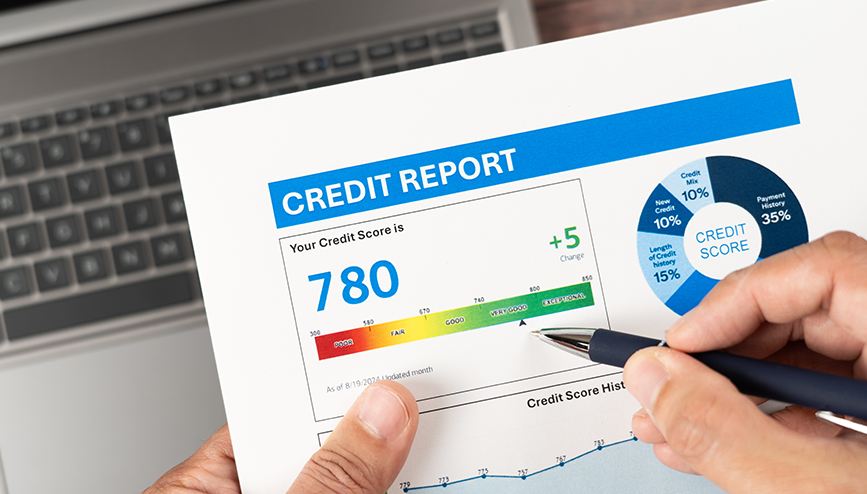
This is where machine learning and predictive modeling are transforming credit risk assessment. By analyzing large datasets and identifying hidden patterns, machine learning helps organizations predict potential defaults more accurately.
For CFOs and finance leaders, adopting credit risk ML models enables more informed lending decisions, better portfolio monitoring, and stronger financial resilience.
The Evolving Landscape of Credit Risk Assessment
Historically, financial risk modeling relied on statistical methods such as credit scorecards and logistic regression. These approaches analyze borrower characteristics—such as credit history, income stability, and repayment behaviour—to estimate the likelihood of default.While these models remain important, modern financial systems generate far more data than traditional tools can easily process. As a result, many organizations are integrating machine learning in finance to enhance their credit risk assessment frameworks.
By combining traditional techniques with predictive modeling, institutions can identify risk patterns earlier and make more proactive credit decisions.
Machine Learning Techniques in Credit Risk Modeling
Machine learning improves financial risk modeling by helping institutions analyze large volumes of financial and behavioral data and generate more accurate predictions.Decision Trees and Random Forests
These models classify borrowers into different risk categories based on multiple financial indicators. Random forests combine several decision trees, improving accuracy and reducing prediction errors.Gradient Boosting Models
Gradient boosting techniques enhance predictive performance by learning from previous model errors. They are widely used in credit risk ML because they capture complex relationships within financial datasets.Neural Networks
Neural networks can analyze nonlinear relationships within high-dimensional financial data. They are particularly useful in advanced predictive modeling where traditional models may fall short.Behavioral and Transaction Data Analysis
Machine learning models can also incorporate alternative data sources such as transaction patterns, payment behavior, and digital activity. This helps create a more comprehensive view of borrower risk profiles.The Value of Predictive Modeling for CFOs
Integrating predictive modeling into financial risk modeling frameworks provides significant strategic benefits.By analyzing both historical and real-time data, predictive models can identify potential credit risks before they materialize. This enables finance leaders to strengthen credit policies and manage financial exposure more effectively.
Key benefits include:
- More accurate credit risk forecasting
- Better lending and credit decision-making
- Improved portfolio risk management
- Stronger data-driven financial planning
For CFOs, credit risk ML models support better capital allocation and help organizations respond more effectively to financial uncertainty.
Implementation Considerations
While machine learning offers significant benefits, organizations must adopt a structured approach when integrating it into financial risk modeling frameworks.Data Quality and Governance
Reliable models depend on accurate, well-governed financial data. Strong data management practices are essential for model performance and compliance.Model Transparency
Regulators and stakeholders often require clear explanations of how risk scores are generated. Organizations must ensure their credit risk ML models remain transparent, explainable and interpretable.Technology Integration
Many institutions still operate on legacy financial systems. Integrating predictive modeling tools with existing infrastructure requires careful planning and technology upgrades.Skills and Talent
Successful adoption also requires collaboration between finance professionals, risk managers, and data scientists.Strategic Outlook for Finance Leaders
As financial ecosystems become increasingly data-driven, financial risk modeling powered by machine learning is becoming a strategic capability rather than just an analytical tool.By adopting predictive modeling and credit risk ML, organizations can strengthen risk management, improve credit decisions, and gain deeper insights from financial data.
For finance leaders, machine learning is becoming a core enabler of proactive risk management and smarter capital allocation.
Conclusion
Machine learning is redefining the future of financial risk modeling and credit risk assessment. By leveraging predictive modeling techniques, organizations can enhance risk forecasting, improve decision-making, and build more resilient financial systems.For finance leaders and CFOs, the focus should not only be on adopting new technologies but also on embedding data-driven risk intelligence into broader financial strategy.
Recent Insights